
Twenty-three construction packages approved for the Ruwanpura and Central Expressways as Government says the projects will be financed without new loans
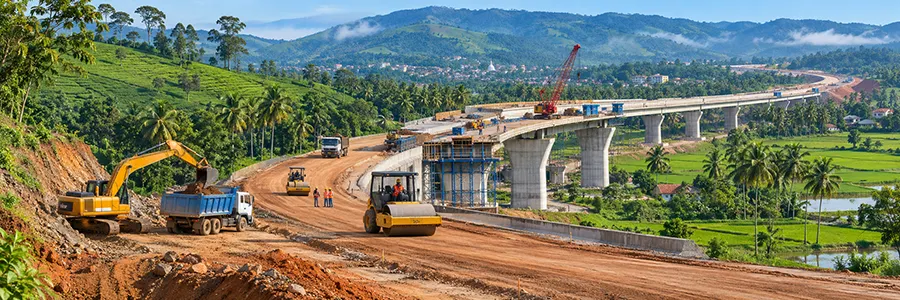
Sri Lanka’s Cabinet has approved 23 construction contracts with a reported combined value of Rs.494.81 billion for sections of the Ruwanpura and Central Expressways, creating one of the country’s largest recent infrastructure programmes.
Sri Lanka’s Cabinet has approved the awarding of 23 construction contracts valued at a reported Rs.494.81 billion for two major expressway sections.
The approvals cover:
- 11 construction packages for the first phase of the Ruwanpura Expressway, extending from Kahathuduwa to Ingiriya.
- 12 construction packages for the Kurunegala–Galewala section of the Central Expressway.
The combined contract value reported by the Cabinet Spokesman comprises Rs.251.37 billion for the Ruwanpura Expressway packages and Rs.243.44 billion for the Central Expressway packages, inclusive of Value Added Tax.
What Has Actually Been Approved?
The latest Cabinet decisions concern the award of construction packages to selected contractors. They should not be described as approval for two entirely new expressways from beginning to end.
The Ruwanpura awards relate to the first phase between Kahathuduwa and Ingiriya, including the interchange connecting the route with the Southern Expressway.
The Central Expressway awards relate to the first phase of Section Four, covering approximately 38.5 kilometres between Kurunegala and Galewala. The full fourth section is intended eventually to extend from Kurunegala to Dambulla.
11 construction packages
Reported value: Rs.251.37 billion
12 construction packages
Reported value: Rs.243.44 billion
Kahathuduwa–Ingiriya Section of the Ruwanpura Expressway
The first Ruwanpura Expressway phase runs from Kahathuduwa at chainage kilometre 1+820 to Ingiriya at kilometre 24+000.
Cabinet had previously approved construction of this phase on 27 July 2026. Bids were subsequently invited through the National Competitive Procurement process for its implementation under 11 separate packages.
Following bid evaluation and recommendations from the relevant High-Level Procurement Committee, Cabinet approved the award of the packages to substantially responsive bidders. cabinetoffice.gov.lk
Reported Ruwanpura contract awards
| Contractor | Reported contract value |
|---|---|
| International Construction Consortium | Rs.34.94 billion |
| K.D.A. Weerasinghe and Company | Rs.33.11 billion |
| NEM Construction | Rs.24.30 billion |
| Access Engineering—Package 1 | Rs.27.99 billion |
| Access Engineering—Package 2 | Rs.17.62 billion |
| Maga Engineering—Package 1 | Rs.23.01 billion |
| Maga Engineering—Package 2 | Rs.16.98 billion |
| Senura–Sanken joint venture | Rs.20.83 billion |
| Tudawe Brothers | Rs.18.48 billion |
| RR Construction | Rs.17.96 billion |
| Edward and Christie | Rs.16.15 billion |
The reported total for the 11 Ruwanpura packages is Rs.251.37 billion, including VAT. Daily FT
Kurunegala–Galewala Section of the Central Expressway
The second group of awards covers approximately 38.5 kilometres, from Kurunegala at kilometre 78+000 to Galewala at kilometre 116+500.
Cabinet initially approved procurement for this section on 30 June 2026. National Competitive Procurement was then used to invite bids for 12 construction packages.
The official project terms indicate a proposed 42-month construction period for each package, although actual commencement and completion will depend on contract mobilisation, site availability and implementation. cabinetoffice.gov.lk
Reported Central Expressway contract awards
| Contractor | Package awards |
|---|---|
| Maga Engineering | Rs.14.15 billion, Rs.26.28 billion and Rs.24.45 billion |
| NEM Construction | Rs.16.15 billion and Rs.24.61 billion |
| International Construction Consortium | Rs.16.88 billion and Rs.22.51 billion |
| Edward and Christie | Rs.18.39 billion |
| K.D.A. Weerasinghe and Company | Rs.27.29 billion |
| Tudawe Brothers | Rs.14.44 billion |
| RR Construction | Rs.15.90 billion |
| Access Engineering | Rs.22.39 billion |
The combined reported value of these 12 packages is Rs.243.44 billion, including VAT. Daily FT
Government Says Projects Will Use Tax Revenue
Transport, Highways and Urban Development Minister Bimal Rathnayake has said that the two expressway projects will be financed entirely through tax revenue, without obtaining new loans.
The Minister described the investment as Rs.451 billion and characterised the financing arrangement as fully funded by public revenue.
The Cabinet Spokesman’s reported contract-package total is Rs.494.81 billion, inclusive of VAT. The Transport Minister separately described the investment as Rs.451 billion.
The reviewed announcements do not provide a complete reconciliation of the Rs.43.81 billion difference. SLD therefore reports both figures with their respective attribution instead of assuming why they differ.
Connection with the 2027 Public-Investment Programme
The Rs.494.81 billion reported contract value is equivalent to almost one-quarter of the Government’s Rs.2 trillion public capital-expenditure programme announced with Budget 2027.
This does not mean that the full contract value will necessarily be paid during a single financial year. Large infrastructure contracts are normally implemented and paid over several stages, subject to construction progress, certification and the terms of each agreement.
The expressway programme may generate demand across engineering, construction materials, transport, surveying, machinery, accommodation, food supply and other supporting services.
However, the Cabinet announcements reviewed for this article do not provide verified estimates for new employment, subcontracting opportunities or the number of businesses that may benefit.
Potential Importance for Businesses and Regional Development
Improved road connectivity can support commerce by reducing travel times and improving access between production areas, markets and logistics centres.
The Kahathuduwa–Ingiriya section could strengthen connections between the Western Province and areas served by the proposed Ruwanpura corridor.
The Kurunegala–Galewala section is intended to extend the Central Expressway northwards and improve connectivity towards Dambulla and the broader central and northern regions.
Possible commercial benefits may include:
- Greater demand for construction materials and equipment.
- Opportunities for qualified subcontractors and technical specialists.
- Improved access for agriculture, tourism and regional industries.
- More efficient movement of goods between districts.
- New commercial activity around interchanges and connected towns.
These are potential longer-term effects—not guaranteed outcomes. Their scale will depend on timely implementation, cost control, route integration and how surrounding regions use the improved connectivity.
- Official subcontracting and supplier opportunities announced by the principal contractors.
- Road Development Authority procurement notices and contract disclosures.
- Construction commencement and mobilisation dates for each package.
- Local-content, workforce and material-sourcing requirements.
- Environmental approvals, land acquisition and community consultations.
- Progress reports, revised costs and scheduled completion dates.
Approval Does Not Mean Immediate Completion
The awarding of contracts is an important administrative and commercial milestone, but it is not the same as completing or opening an expressway.
Projects of this scale require site mobilisation, land access, engineering work, material procurement, environmental compliance, construction supervision and continuing funding.
EconomyNext reported that less than 25% of the Rs.1.38 trillion allocated for capital expenditure in the 2026 Budget had been spent during the first nine months of the year. This raises an important implementation question: whether Sri Lanka can translate large allocations and contract awards into timely construction progress. economynext.com
Performance should therefore be assessed through measurable indicators such as:
- Physical construction completed.
- Payments certified against completed work.
- Compliance with approved budgets.
- Progress against contractual timelines.
- Public disclosure of delays or cost revisions.
- Safety, environmental and quality performance.
A Major Test of Public-Infrastructure Delivery
The scale of the approved packages makes the expressway programme an important test of Sri Lanka’s ability to deliver major infrastructure using domestic resources.
If the Government successfully maintains funding and the contractors deliver the sections within approved budgets and timelines, the projects could strengthen national connectivity and create wider commercial opportunities.
The crucial next stage is implementation. Businesses and the public should distinguish among Cabinet approval, contract award, construction commencement, physical progress and final completion when evaluating the programme.
