
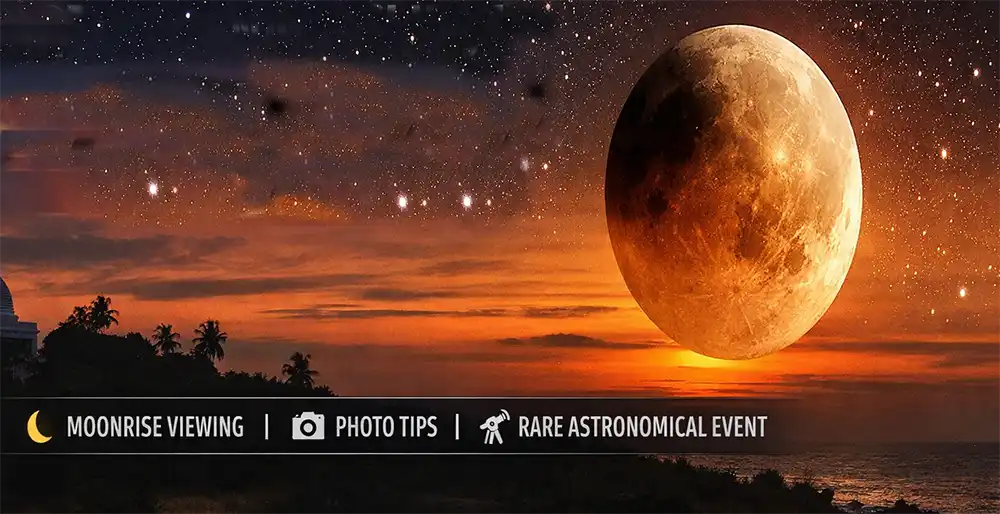
Sri Lanka (Colombo / Kurunegala time) — Today, March 3, 2026, skywatchers across Sri Lanka will witness a spectacular celestial event — a partial lunar eclipse — as the Moon rises above the eastern horizon. Although this eclipse is classified globally as a total lunar eclipse, the total phase will occur before moonrise in Sri Lanka, meaning only the partial phase will be visible locally.
This astronomical moment is the only lunar eclipse visible in Sri Lanka in 2026, offering stargazers, photographers, and astronomy enthusiasts a rare chance to observe the Earth’s shadow crossing the Moon.
🌗 What Is a Lunar Eclipse?
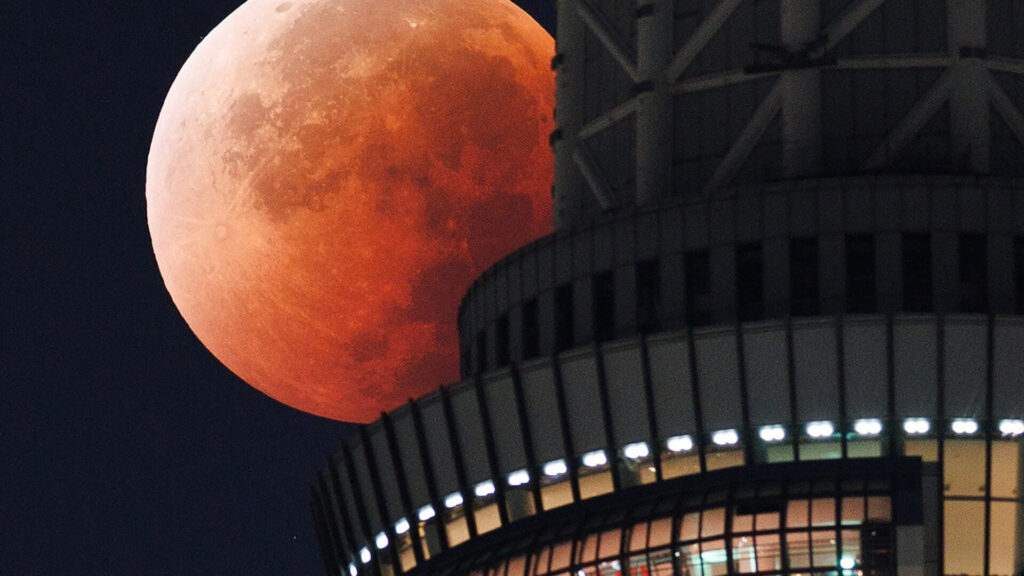
A lunar eclipse takes place when the Earth moves between the Sun and the Moon, casting its shadow on the lunar surface. During a total lunar eclipse, the entire Moon enters Earth’s darkest shadow (umbra), often turning a striking reddish hue — earning it the nickname “Blood Moon”. However, depending on your location and local moonrise/moonset times, only parts of the eclipse might be visible.
In Sri Lanka, since the Moon rises late in the day, observers will miss the deep total phase and only see the tail end of the partial eclipse as the Moon climbs above the eastern horizon.
📅 Eclipse Timeline in Sri Lanka (Local Time)
| Eclipse Phase | Time (Sri Lanka Standard Time) | Visible Locally? |
|---|---|---|
| Penumbral Begins | 2:14 PM | ❌ Not visible (Moon below horizon) |
| Partial Begins | 3:20 PM | ❌ Not visible |
| Total Begins | 4:34 PM | ❌ Not visible |
| Maximum Eclipse | 5:03 PM | ❌ Not visible |
| Total Ends | 5:32 PM | ❌ Not visible |
| 🌙 Moonrise & Partial Visible | 6:21 PM | ✔ Yes |
| 🌗 Partial Eclipse Ends | 6:47 PM | ✔ Yes |
| Penumbral Ends | 7:53 PM | ❌ Not noticeable |
📌 To view this event, find a location with a wide open Eastern horizon (no tall buildings or trees) and as little cloud cover as possible.
🌠 What You’ll See
Once the Moon rises after 6:20 PM, you’ll notice:
- A dark curved Earth shadow still covering a portion of the Moon’s face.
- The rest of the Moon bright and glowing in the twilight sky.
- A slow transition as the shadow recedes — a perfect opportunity for pictures.
Unlike solar eclipses, no special glasses are needed to watch a lunar eclipse safely with the naked eye. However, binoculars or a telescope will enhance your view of lunar surface details and the shadow movement.
📸 Best Tips for Watching & Photography
✔ Arrive at your viewing spot before 6:15 PM.
✔ Use a telephoto lens (200 mm or higher) on cameras for close-up Moon images.
✔ Bring a sturdy tripod for long exposure shots during low light.
✔ Shoot short time‑lapse videos to capture the Moon rising and shadow moving.
✔ Clear skies = best views!
🧠 Why This Eclipse Is Special
This is the only lunar eclipse Sri Lanka will get to witness in 2026. The next visible eclipse from Sri Lanka will be in 2027 (p umbral lunar eclipse, Feb 20) and then 2028 (several partial and total lunar eclipses).
Plus, this eclipse is part of a rare celestial sequence — a total lunar eclipse observable in many parts of the world earlier in the night, followed by Sri Lanka’s own partial view at moonrise.
📌 Final Thoughts
Whether you’re an astronomy enthusiast, a photographer, or simply someone who loves the sky, today’s partial lunar eclipse in Sri Lanka is an unforgettable natural spectacle. Get outside after 6:20 PM, face the east toward the rising Moon, and enjoy watching Earth’s shadow slowly disappear from the lunar disk.
Don’t miss this 2026 sky highlight! 🌌
