
Habitat loss and dangerous encounters are taking the lives of elephants and people—but protecting habitats, securing communities and following science can create a safer future
Published: 22 October 2026
Content type: Conservation feature and public-awareness article

Sri Lanka’s wild elephants are among the island’s greatest natural treasures. However, shrinking habitats, disrupted movement routes and deadly human–elephant conflict are placing both elephants and rural communities at risk. Protecting these magnificent animals requires more than admiration—it demands responsible development, safer villages, protected elephant corridors and practical, science-based coexistence.
🐘 Sri Lanka’s Human–Elephant Conflict
Recent figures show why protecting elephants must also include protecting the people who share their landscape.
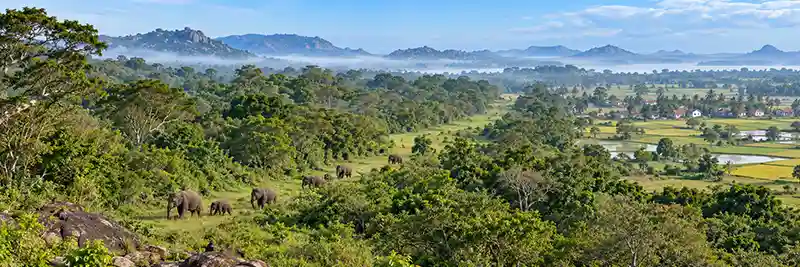
Sri Lanka’s elephants have shared the island’s forests, grasslands and dry-zone landscapes with human communities for generations.
They are a prominent part of the country’s natural identity and an important attraction for its tourism industry. Yet the survival of wild elephants cannot be guaranteed by cultural admiration or tourism value alone.
Sri Lanka is experiencing one of the world’s most serious human–elephant conflicts. The consequences are devastating for elephants and for families living in affected rural districts.
Reuters reported in October 2026 that an average of approximately 402 elephants and 138 people had died annually in conflict-related incidents since 2019. The Department of Wildlife Conservation recorded 488 elephant deaths in 2023. www.reuters.com
Elephants have reportedly died through shootings, poisoning, electrocution, train collisions and accidents such as falling into unprotected wells.
Human victims include farmers, wildlife officers and residents encountering elephants near houses, farms, reservoirs and roads.
These deaths demonstrate why the issue should not be presented as a struggle in which society must choose between elephants and people. A successful national response must protect both.
The Real Conflict Is Over Space
Human–elephant conflict is sometimes described as elephants invading villages. However, the underlying problem is more complex.
Elephants require large areas through which they can find food, water, shelter and access to other elephant populations. Their movement does not follow the administrative boundaries used to separate national parks, forests, settlements and agricultural land.
As forests and movement routes become fragmented by development, cultivation, roads, railways and settlements, elephants may be forced to travel through human-occupied areas.
According to figures reported by Reuters, an estimated 70% of Sri Lanka’s 7,451 wild elephants live outside protected areas. www.reuters.com
The Department of Wildlife Conservation states that Sri Lanka’s protected-area network covers approximately 1,258,997 hectares, or 19.25% of the country’s land area. www.dwc.gov.lk
These figures show why elephants cannot be protected only within national parks. Conservation must also address the wider landscapes occupied by elephants and people.
Not Elephants Against People
Both are suffering from an increasingly unsafe shared landscape.
🐘 Elephants Need
- Connected habitats
- Safe access to food and water
- Protected movement corridors
- Protection from illegal electrocution and poisoning
🏡 Communities Need
- Protection for homes and farms
- Reliable early-warning systems
- Properly maintained barriers
- Fair assistance after conflict-related losses
Why Capturing or Moving Elephants Is Not Enough
Removing an elephant from one location may provide temporary relief, but it does not necessarily correct the conditions that created the conflict.
If a village, farm or infrastructure project continues to obstruct an elephant range without adequate protection, other elephants may eventually enter the same area. Relocated animals may also return or encounter people in unfamiliar locations.
Sri Lanka’s National Action Plan for the Mitigation of Human–Elephant Conflict was prepared following an expert review of available mitigation methods and consultations with communities and relevant institutions.
The measures included in the plan were assessed according to their proven effectiveness, capacity for implementation at the required scale and cost-effectiveness. www.ccrsl.org
This provides Sri Lanka with an existing science-based framework. The priority is to implement appropriate measures consistently, monitor results and adjust interventions using reliable evidence.
Electric Fences Must Be Located and Maintained Properly
Electric fencing remains an important conflict-management tool, but the position and maintenance of a fence determine whether it protects people effectively.
A fence placed only along the administrative boundary of a wildlife reserve may not correspond with the areas elephants actually use. It can also leave villages exposed if elephants already live outside that boundary.
Community-based fences built to protect settlements, together with seasonal fences around active paddy fields and cultivation, can create safer separation while allowing elephants to use surrounding habitat.
A parliamentary discussion in August 2026 highlighted community-based electric fencing, seasonal paddy-field fencing, habitat management and water management as possible short- and long-term measures. www.parliament.lk
Fences must never be connected illegally to household electricity. Unsafe high-voltage barriers can kill elephants, other animals and people.
Protecting Elephant Corridors
Elephant corridors allow animals to travel between habitats.
When a route is blocked by construction, cultivation or other development, elephants may be redirected towards villages or forced to cross dangerous roads and railway lines.
Sri Lankan parliamentary committees have emphasised the need to expedite the declaration of priority elephant corridors, improve habitat inside wildlife reserves and strengthen awareness among affected communities. www.parliament.lk
Declaring a corridor alone is not enough. It must be surveyed, protected from damaging development and managed with the participation of surrounding communities.
Six Steps Towards Safer Coexistence
Human–elephant conflict requires connected solutions—not one isolated response.
Protect Corridors
Preserve the routes connecting elephant habitats.
Secure Villages
Use correctly positioned community protection systems.
Protect Cultivation
Support seasonal fencing and safer farming practices.
Warn Communities
Strengthen local alerts and trained response networks.
Restore Habitats
Improve access to appropriate habitat and water resources.
Plan Responsibly
Assess wildlife risks before approving development.
Development Must Consider Elephant Movement
Roads, railways, settlements, farms and commercial projects can produce economic and social benefits. However, developments within elephant ranges must be planned using accurate environmental information.
Wildlife assessments should not become administrative formalities completed after major decisions have already been made.
Planning authorities should determine whether a proposed project:
- Occupies an active elephant corridor.
- Restricts access to food or water.
- Separates one habitat from another.
- Increases railway or road-crossing risks.
- Pushes elephants towards nearby settlements.
- Requires protection measures for neighbouring communities.
Development that ignores elephant movement can transfer the resulting danger and financial cost to rural families.
Rural Communities Must Not Carry the Burden Alone
People living in conflict-prone areas may experience damaged houses, destroyed harvests, lost income, injuries and deaths.
Families should not be expected to absorb these consequences in the name of wildlife conservation.
The 2026 National Budget included funding for human–elephant conflict mitigation, electric-fence construction and maintenance, habitat food and water management, regional wildlife capacity and compensation for victims. www.parliament.lk
Effective coexistence therefore requires:
- Timely and fair compensation.
- Assistance to strengthen homes and food-storage areas.
- Protection for active farmland.
- Local participation in fence placement and maintenance.
- Emergency medical and livelihood support.
- Rapid communication with wildlife authorities.
- Long-term economic support for highly affected communities.
When communities receive meaningful protection, conservation measures are more likely to gain public trust and participation.
Technology Can Help—but It Is Not a Substitute for Habitat Protection
Early-warning systems using cameras, mobile alerts, sensors and community communication networks may help residents avoid unexpected encounters.
Sri Lankan researchers have also explored non-invasive elephant detection using seismic signals generated by elephant footfalls. Experimental research has demonstrated the potential for such systems, although field performance, cost, reliability and maintenance must be evaluated before widespread deployment. arxiv.org
Technology can provide additional warning time. It cannot replace elephant corridors, habitat protection, responsible development or well-maintained community barriers.
Responsible Tourism Has a Role
Sri Lanka’s elephants attract local and international visitors. Wildlife tourism can generate employment and encourage environmental protection, but only when animals are treated responsibly.
Visitors and tour operators should:
- Maintain a safe distance from wild elephants.
- Never block an elephant’s route.
- Avoid surrounding animals with multiple vehicles.
- Never feed elephants beside roads or inside parks.
- Follow wildlife officers’ instructions.
- Avoid pressuring elephants for photographs.
- Select responsible wildlife-tourism operators.
Feeding elephants can teach them to approach people and vehicles for food. This behaviour may create dangerous encounters long after a visitor has left.
The Media Must Report Responsibly
Language influences how communities understand wildlife.
Describing every elephant as an “invader,” “attacker” or “problem animal” without explaining the surrounding conditions can increase fear and hostility. Responsible reporting should acknowledge the experiences of victims while also examining habitat fragmentation, land use, food availability and elephant movement.
Reporting should neither romanticise elephants nor blame rural communities. It should help the public understand why conflict occurs and which solutions have credible evidence behind them.
Every Voice Can Help Protect Them
Small responsible decisions can support a larger conservation effort.
Every Life Matters
Sri Lanka’s elephants do not need public sympathy only after another animal is killed. Rural families should not receive national attention only after another person loses their life.
Both require preventive action.
The way forward is to protect elephant habitats and movement corridors while making villages, farms, roads and railway routes safer for people.
It requires decisions supported by science, consistent government implementation, responsible development, ethical tourism and the participation of affected communities.
Sri Lanka’s wild elephants are not simply tourist attractions. They are an irreplaceable part of the island’s ecosystems, history and national identity.
If these magnificent animals are to remain in the wild for future generations, coexistence must become more than a slogan. It must influence how Sri Lanka manages land, development, agriculture, infrastructure and conservation.
Every elephant matters. Every human life matters. Every responsible voice counts.
