
Record visitor numbers have created a major opportunity—but the benefits must extend beyond large hotels and established destinations.
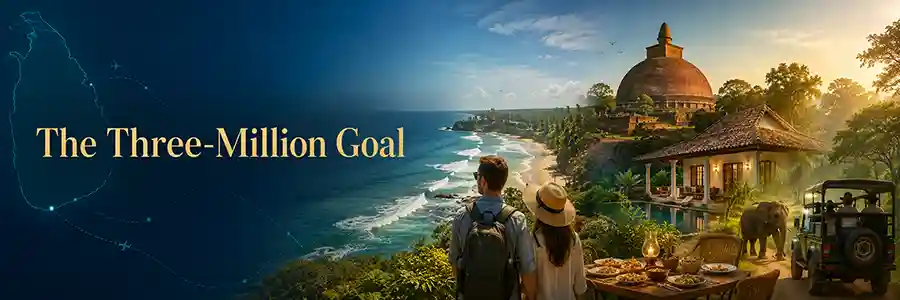
Highlighted description: Sri Lanka welcomed a record 2.36 million tourists in 2025 and is aiming for three million in 2026. Achieving that ambition could generate new opportunities for hotels, restaurants, tour operators, transport providers, artisans and community businesses across the island.
From golden beaches and ancient cities to wildlife, food and warm hospitality, Sri Lanka offers an extraordinary variety of experiences within a relatively small island.
International interest is growing. The country welcomed 2,362,521 tourists in 2025, representing approximately 15% growth from 2024 and exceeding its previous 2018 benchmark.
Sri Lanka has set an ambitious goal of attracting three million visitors in 2026. However, the success of this tourism drive should not be measured by arrival numbers alone.
The more important question is whether tourism can create sustainable income, quality employment and meaningful opportunities for businesses throughout the country.
A Strong Recovery with a Challenging Target
Sri Lanka recorded 1,146,573 tourist arrivals during the first six months of 2026, according to the Sri Lanka Tourism Development Authority. This included particularly strong results in January and February, followed by mixed monthly performance.
Reaching three million visitors would therefore require considerable momentum during the remainder of the year.
Although the target is challenging, it represents an important opportunity. More visitors can increase demand for accommodation, transport, dining, guided experiences, entertainment, wellness services and locally manufactured products.
The greatest impact will occur when tourist spending circulates through multiple businesses instead of remaining concentrated within a limited number of organisations.
Sri Lanka Tourism Snapshot
Growing visitor numbers could unlock opportunities across the island.
The Tourism Opportunity Extends Beyond Hotels
A tourist’s spending journey may begin with an airline and hotel, but it rarely ends there.
Visitors need taxis, tour guides, restaurants, cafés, activity providers and retail businesses. They purchase spices, jewellery, clothing, handicrafts and wellness treatments. They may also visit cultural attractions, national parks, farms and community enterprises.
This creates opportunities for businesses of many sizes.
A family-run guesthouse can partner with a local guide. A restaurant can introduce an authentic regional menu. A driver can create specialist airport-transfer and touring packages. An artisan can combine a workshop demonstration with direct product sales.
Sri Lanka’s tourism offering becomes more valuable when businesses collaborate to create complete experiences rather than competing only on price.
Turning Visitor Spending into Local Prosperity
Increasing visitor numbers does not automatically guarantee that communities will benefit. Businesses must give travellers compelling reasons to stay longer, explore different regions and purchase locally produced goods and services.
This means moving beyond conventional sightseeing.
Tea experiences, village cooking classes, wildlife photography, cycling journeys, cultural workshops, wellness retreats and agricultural tours can attract travellers looking for meaningful experiences.
These activities can also distribute tourism income beyond Colombo, the southern coast and established cultural destinations.
What International Travellers Expect in 2026
A beautiful destination can attract attention, but professional service determines whether visitors recommend it.
Modern travellers expect accurate online information, transparent prices and prompt communication. They want safe transport, clean facilities and simple digital payment options. They also value genuine hospitality and responsible environmental practices.
Every tourism business should maintain an updated online presence with clear photographs, operating hours, contact details and customer reviews. A directory listing can strengthen visibility, particularly for smaller businesses that cannot maintain complex websites.
Through SLD, travellers and tourism partners can discover Sri Lankan accommodation providers, restaurants, travel agencies, guides and supporting services in one accessible place.
Building a More Sustainable Tourism Industry
Rapid growth can create pressure on beaches, wildlife, historic sites, infrastructure and local communities. Sri Lanka should therefore pursue valuable tourism—not simply the highest possible number of arrivals.
Businesses can contribute by reducing disposable plastic, conserving water, managing waste responsibly and respecting wildlife regulations. They can employ local people, purchase regional products and communicate cultural expectations to visitors.
Protecting Sri Lanka’s environment and heritage is not separate from business development. These assets are central to the experience that tourists are travelling to enjoy.
Can Three Million Visitors Transform Sri Lanka?
Three million tourists would be a significant achievement, but its value will depend on what happens after each visitor arrives.
If tourists stay longer, explore more regions and purchase from local businesses, the benefits can reach thousands of families. If small operators receive better digital visibility and collaborate with established companies, tourism can support more inclusive economic growth.
Government promotion and international campaigns can bring travellers to Sri Lanka. The responsibility for creating memorable experiences then belongs to the entire industry.
Sri Lanka already possesses the landscapes, history, culture and hospitality. The next step is to transform those strengths into professional, sustainable and widely shared opportunities.
The country should not simply aim to welcome more tourists. It should inspire them to stay longer, spend responsibly and leave as enthusiastic ambassadors for Sri Lanka.
