
Global oil markets have entered a period of volatility as geopolitical tensions in the Middle East intensify, pushing crude oil prices sharply higher. For countries that rely heavily on imported energy, including Sri Lanka, this trend could create new economic pressures across several sectors.
The conflict in the Middle East has disrupted global energy supply chains and caused crude oil prices to surge above $100 per barrel, the highest levels seen in several years.
As a nation that imports nearly all of its fuel requirements, Sri Lanka is particularly vulnerable to sudden spikes in international oil prices. Economists warn that sustained increases in energy costs could affect transportation, electricity generation, inflation, and overall economic stability.
Global Oil Market Disruptions
The recent escalation of tensions in the Middle East has had a dramatic impact on global oil supply.
Experts say disruptions to shipping routes, particularly through the Strait of Hormuz, have reduced the availability of crude oil in international markets. This strategic shipping corridor carries roughly one-fifth of the world’s oil supply, making it one of the most critical energy routes globally.
International agencies warn that the conflict could cause one of the largest oil supply disruptions in modern history, forcing countries to release emergency reserves to stabilize global markets. (
The immediate result has been a rapid rise in oil prices and increased uncertainty across global financial markets.
Sri Lanka Raises Fuel Prices as Global Costs Increase
Sri Lanka has already begun to feel the impact of rising oil prices.
In early March 2026, the government increased retail fuel prices by more than 8 percent, with petrol and diesel prices rising by around Rs. 22 per litre. The adjustment was implemented under the country’s fuel pricing formula following the surge in global crude oil prices.
According to the Ceylon Petroleum Corporation (CPC), the price revision was also aimed at controlling panic buying and ensuring stable fuel distribution across the country.
Fuel stations across Sri Lanka experienced increased demand as motorists rushed to fill their tanks amid fears of potential supply disruptions.
Why Sri Lanka Is Highly Vulnerable to Oil Price Shocks
Sri Lanka’s economy depends heavily on imported energy. Petroleum products play a vital role in powering the country’s transportation system, electricity generation, and industrial production.
Economists highlight several reasons why rising global oil prices can quickly impact the Sri Lankan economy:
1. High Dependence on Fuel Imports
Sri Lanka imports nearly all of its petroleum requirements, meaning global price increases immediately affect the country’s import bill and foreign exchange reserves.
2. Impact on Transportation Costs
Higher diesel and petrol prices raise the cost of transportation for goods and passengers, which ultimately increases the prices of everyday products.
3. Electricity Generation Costs
Fuel oil and diesel are widely used in electricity generation, especially during periods of high demand or low hydropower output. Rising fuel costs therefore increase electricity production expenses.
4. Pressure on Inflation
Energy price increases typically trigger inflation across the entire economy, affecting food prices, logistics, manufacturing, and services.
Ripple Effects Across Key Economic Sectors
The impact of rising oil prices extends far beyond fuel pumps. Several sectors of the Sri Lankan economy could experience indirect consequences.
Transportation and Logistics
Higher fuel prices increase freight and transport costs. This affects the movement of goods, increasing prices for imported products and locally produced items.
Tourism Industry
Sri Lanka’s tourism sector, which has been recovering strongly in recent years, could also face challenges. Rising global fuel prices often lead to more expensive airline tickets and travel costs, potentially reducing tourist arrivals.
Export Industries
Export industries such as tea, garments, and agriculture may face higher production and shipping costs, which can reduce competitiveness in international markets.
Household Living Costs
Higher energy prices usually translate into increased costs of living for households, particularly through rising transport fares, electricity bills, and food prices.
Fuel Reserves and Supply Situation
Despite rising prices, authorities have reassured the public that Sri Lanka currently has sufficient fuel stocks.
Officials say the country has secured enough supplies to meet national demand for at least several weeks, although economists warn that Sri Lanka’s strategic fuel reserves remain relatively limited compared to many developed countries.
Global shipping disruptions could still pose risks if the Middle East conflict escalates or key oil transport routes remain unstable.
Broader Economic Risks
Analysts believe that prolonged instability in the Middle East could create additional challenges for Sri Lanka’s economic recovery.
Some potential risks include:
- Higher import bills for fuel and energy
- Increased inflation across goods and services
- Pressure on the Sri Lankan rupee
- Rising government expenditure on energy subsidies
- Reduced economic growth due to higher production costs
Additionally, Sri Lanka receives a significant share of worker remittances from Sri Lankans employed in Middle Eastern countries. Any regional economic disruption could also affect these important foreign exchange inflows.
What the Future Could Look Like
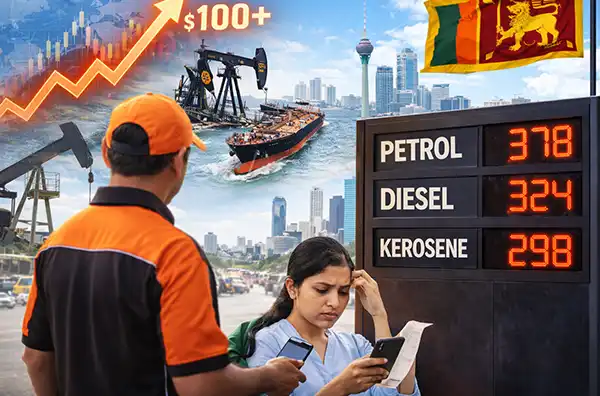
While global oil prices often fluctuate depending on geopolitical developments, economists say Sri Lanka must prepare for possible long-term volatility in energy markets.
Experts suggest several strategies to reduce vulnerability:
- Expanding renewable energy investments
- Increasing energy efficiency
- Diversifying fuel import sources
- Developing larger strategic fuel reserves
These measures could help Sri Lanka build greater resilience against global energy shocks in the future.
Conclusion
The ongoing Middle East conflict has once again demonstrated how global geopolitical tensions can directly affect smaller economies that rely on imported energy.
For Sri Lanka, rising oil prices present a significant economic challenge that could influence inflation, transportation costs, electricity generation, and overall economic stability.
While authorities have reassured the public that fuel supplies remain stable for now, economists warn that continued volatility in global oil markets could create additional economic pressures in the months ahead.
