
New programme combines policy reforms and financial intermediation to support a stronger and more inclusive financial ecosystem for small businesses
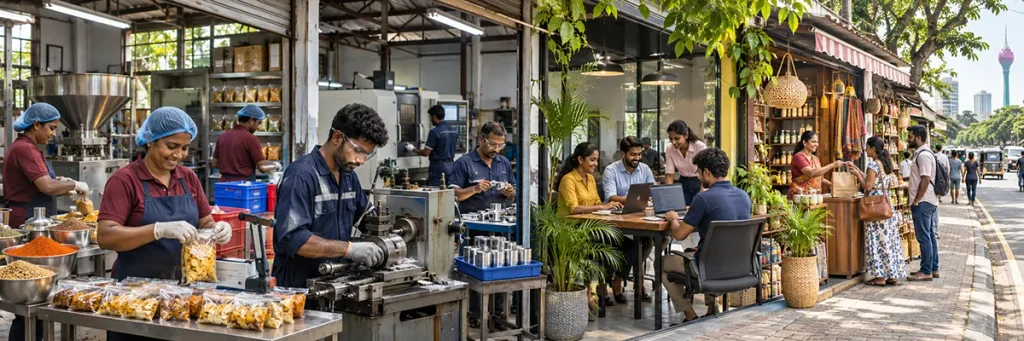
Sri Lanka’s Cabinet has approved entering into financing agreements with the Asian Development Bank for a US$200 million programme focused on strengthening the financial environment for micro, small and medium-sized enterprises. Business application procedures and individual lending terms have not yet been announced.
Sri Lanka has approved a US$200 million Asian Development Bank financing programme designed to strengthen the country’s financial ecosystem for micro, small and medium-sized enterprises.
The Cabinet approval authorises the Government to enter into the relevant financing agreements with the ADB following formal negotiations conducted by the Department of External Resources.
The programme is officially identified as the Sector Development Program for Developing a Strong and All-Inclusive Financial Ecosystem for Micro, Small and Medium-Sized Enterprises.
It is intended to combine financial-sector reforms with a financial-intermediation component that could improve access to suitable financing for Sri Lankan enterprises. www.ft.lk
How the US$200 million is structured
The financing will be drawn from the ADB’s ordinary capital resources and divided into two equal components.
US$100 million policy-based component
The first US$100 million will be provided through policy-based financing.
This component is associated with reforms intended to build a stronger, more inclusive and better-functioning financial ecosystem for MSMEs.
It carries a 12-year repayment period, including a three-year grace period.
US$100 million financial-intermediation component
The remaining US$100 million will be provided through a financial-intermediation financing arrangement.
Financial intermediation normally involves providing funds through participating financial institutions. However, the Government has not yet announced which Sri Lankan banks or financial institutions will participate, or how much of this component will become available to individual businesses.
This component carries a 15-year repayment period with a five-year grace period.
Financing structure announced by the Government
Why MSMEs matter to Sri Lanka
Micro, small and medium-sized enterprises operate across nearly every part of the Sri Lankan economy.
They include manufacturers, retailers, service providers, tourism businesses, technology companies, agricultural producers, exporters, home-based enterprises and community businesses.
The ADB describes MSMEs as important sources of employment and income-generating opportunities. Its programme documentation also identifies the need to improve economic opportunities for women, disadvantaged communities and businesses operating outside Sri Lanka’s main urban centres. www.adb.org
However, many small businesses face barriers when attempting to obtain formal financing. Challenges can include:
- Insufficient collateral
- Limited financial records
- High borrowing costs
- Short repayment periods
- Limited access to suitable financial products
- Difficulty formalising or expanding a business
- Reduced access to finance outside major commercial centres
- Limited financial products for women-led enterprises
The new programme is intended to address the wider financial ecosystem rather than simply announce a single temporary loan scheme.
What policy-based financing means
A policy-based loan is not normally divided into individual loans and handed directly to business owners.
Instead, it supports agreed reforms and institutional improvements undertaken by the Government. These can include changes to financial-sector policies, regulatory frameworks, credit systems, business classifications and measures promoting more inclusive access to finance.
The results will therefore depend on the specific reforms implemented and whether those reforms produce practical improvements for enterprises.
Applications have not opened
The Cabinet approval does not mean that US$200 million is immediately available as direct loans to individual businesses. Participating institutions, eligibility rules, interest rates, loan limits and application dates have not yet been announced.
What has not yet been announced
The available Government information does not identify:
- Participating banks or financial institutions
- Business eligibility requirements
- Application opening or closing dates
- Individual loan amounts
- Interest rates for businesses
- Required collateral
- Priority industries
- Regional allocations
- Application forms or registration websites
- The proportion ultimately available for direct enterprise lending
Businesses should not make financial commitments based solely on the Cabinet announcement.
They should wait for implementation information from the Ministry of Finance, Department of External Resources, Asian Development Bank and any officially appointed financial institutions.
Part of a wider reform framework
The MSME programme forms part of a wider framework involving up to US$620 million across five proposed subprogrammes.
The Cabinet’s March 2026 decision identified the following areas:
- Trade, investment and industry development
- A stronger and more inclusive financial ecosystem for MSMEs
- Water-supply and sanitation reform
- Resilience and inclusive economic recovery
- Agricultural value-chain financing and commercialisation
The framework was developed to support Sri Lanka’s wider economic reform agenda alongside the International Monetary Fund programme. www.cabinetoffice.gov.lk
The current approval relates to US$200 million connected with the first stage of the MSME financial-ecosystem programme. It should not be confused with approval or immediate disbursement of the entire US$620 million framework.
Possible benefits for Sri Lankan enterprises
If implemented effectively, the programme could contribute to:
- More inclusive business financing
- Stronger financial products for MSMEs
- Improved access for women-led enterprises
- Better opportunities for regional businesses
- Greater financial-sector participation
- Stronger business formalisation
- Increased investment and employment
- Better capacity for businesses to expand
- Improved resilience against economic disruptions
These are intended outcomes rather than guaranteed results for individual enterprises.
The actual effect will depend on implementation, the conditions attached to future business financing and the ability of participating institutions to reach enterprises that currently struggle to obtain credit.
What effective implementation could support
What entrepreneurs should do now
Sri Lankan entrepreneurs do not need to submit an application at this stage because an official application process has not been published.
Businesses can prepare for possible future financing opportunities by:
- Maintaining accurate financial records.
- Registering and formalising business operations where required.
- Separating personal and business finances.
- Preparing recent bank statements and tax records.
- Developing a realistic business or expansion plan.
- Recording existing assets, liabilities and borrowing commitments.
- Monitoring official announcements from Government and participating banks.
- Avoiding unofficial agents who promise guaranteed access to the programme.
No intermediary should be paid merely because they claim to have early access to ADB-backed financing.
A significant opportunity—but implementation will matter
The US$200 million approval represents an important policy and financing development for Sri Lanka’s MSME sector.
Its value, however, will not be determined by the headline amount alone.
Success will depend on whether the programme produces affordable and suitable financial products, reaches enterprises outside major urban areas, supports underserved entrepreneurs and establishes transparent application and monitoring procedures.
For Sri Lankan small businesses, the most important information will come next: which financial institutions will participate, who will qualify, what terms will apply and when applications will open.
Until those details are formally announced, the programme should be presented as an approved financing and financial-sector development initiative—not as an immediately available US$200 million business grant or public loan fund.
