
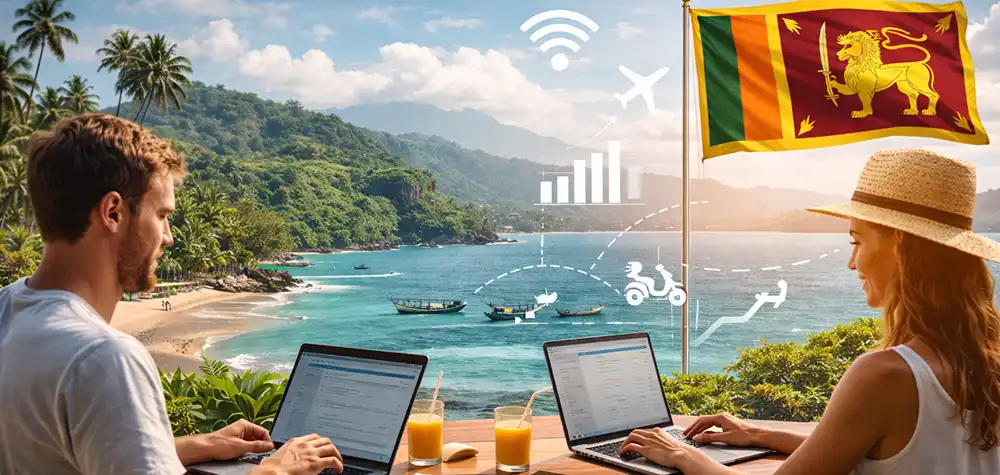
Sri Lanka is entering a new phase of economic diversification by actively positioning itself as a destination for digital nomads — remote professionals who live and work from different parts of the world.
With global work patterns shifting toward flexibility and location independence, Sri Lanka is beginning to capture economic value from this fast-growing segment. The move signals a strategic effort to boost foreign exchange inflows, stimulate local businesses, and diversify the country’s tourism-driven revenue model.
🌍 What Are Digital Nomads — And Why They Matter
Digital nomads are professionals who work remotely using digital tools, often staying in countries for extended periods while contributing to the local economy through accommodation, dining, transport, coworking spaces, and leisure activities.
Unlike short-term tourists, digital nomads typically:
- Stay for several weeks or months
- Spend consistently on local services
- Integrate into local communities
- Support small and medium enterprises
For Sri Lanka, this represents a sustainable revenue stream beyond traditional seasonal tourism.
💻 A Strategic Shift in Economic Thinking
Sri Lanka’s engagement with digital nomads reflects a broader shift in economic policy — moving from dependency on conventional tourism toward value-driven, long-stay economic contributors.
The benefits include:
✔ Stable foreign currency inflows
✔ Increased occupancy for boutique hotels and apartments
✔ Higher demand for cafes, restaurants, and lifestyle services
✔ Growth in coworking and shared office spaces
✔ Promotion of Sri Lanka as a global work-and-live destination
By tapping into this global remote workforce trend, Sri Lanka can create recurring economic value without major infrastructure strain.
🏝 Why Sri Lanka Appeals to Remote Professionals
Sri Lanka naturally offers several competitive advantages for digital nomads:
- Scenic coastal towns like Mirissa, Weligama, and Arugam Bay
- Cool-climate highlands such as Ella and Nuwara Eliya
- Affordable cost of living compared to Western countries
- English-speaking environment
- Growing fiber internet connectivity
- Strong hospitality culture
Combined with its tropical lifestyle and rich cultural heritage, Sri Lanka provides both productivity and quality of life — a key factor for location-independent professionals.
🏦 Economic Impact on Local Businesses
The digital nomad ecosystem stimulates multiple sectors simultaneously:
🏨 Accommodation Sector
Long-term rentals, boutique villas, and guesthouses benefit from steady occupancy beyond peak tourist seasons.
☕ Food & Beverage Industry
Remote workers frequent cafes and restaurants daily, creating reliable customer flow.
🚕 Transport & Mobility
Ride-hailing services, scooter rentals, and local transport providers see consistent demand.
🖥 Coworking & Tech Infrastructure
Shared office spaces, networking hubs, and tech service providers gain new growth opportunities.
This ripple effect supports both urban and semi-urban regions, spreading economic benefits geographically.
📈 Strengthening Sri Lanka’s Foreign Exchange Position

At a time when foreign currency stability remains crucial, attracting digital nomads can help:
- Increase steady USD inflows
- Reduce pressure on seasonal tourism
- Diversify revenue sources
- Enhance international visibility
Unlike short-term visitors, digital nomads spend over longer durations, increasing per-person economic contribution.
🏗 Infrastructure & Policy Considerations
For Sri Lanka to fully capitalize on this opportunity, several enabling factors are essential:
- Clear and streamlined visa frameworks
- Reliable high-speed internet nationwide
- Safe and secure living environments
- Digital payment accessibility
- Improved urban amenities
Developing a structured digital nomad ecosystem can position Sri Lanka as a competitive player alongside regional hubs.
🌐 Global Trend — Local Opportunity
The global remote work revolution accelerated after the pandemic, reshaping employment patterns worldwide. Many countries have introduced special visa categories to attract digital nomads.
Sri Lanka’s participation in this movement aligns with its broader economic recovery strategy — focusing on sustainable, knowledge-driven, and service-oriented income generation.
🔎 Why This Development Matters
The integration of digital nomads into Sri Lanka’s economic framework represents more than tourism — it reflects modernization of the national economic outlook.
Key long-term benefits include:
- Branding Sri Lanka as a global lifestyle destination
- Supporting entrepreneurship and startup culture
- Encouraging knowledge exchange
- Creating new micro-economies in coastal and hill regions
If managed strategically, this segment could evolve into a meaningful pillar of foreign revenue generation.
📌 Conclusion
Sri Lanka’s initiative to generate economic value through digital nomads marks a progressive step in its recovery journey. By leveraging global remote work trends, the country can build a steady, diversified income stream while supporting local businesses and communities.
As infrastructure and policy frameworks continue to evolve, Sri Lanka has the potential to establish itself as a leading remote-work destination in South Asia.
