
DIMO Strengthens Sri Lanka’s Renewable Energy Future with Four New Solar Power Plants in Galle, Adding 18MW of Clean Energy to the National Grid
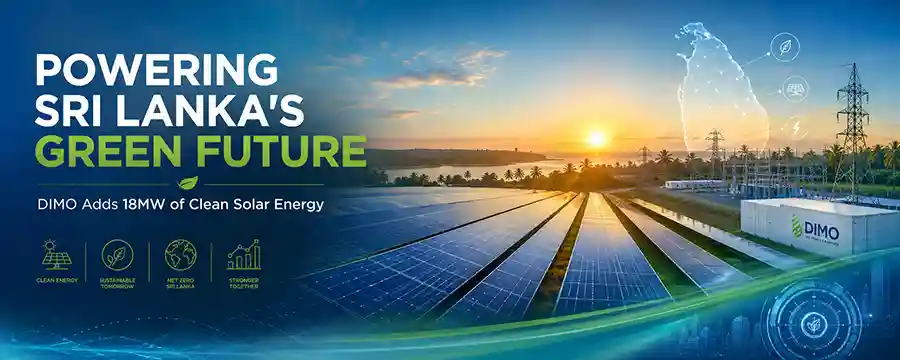
DIMO Expands Its Renewable Energy Portfolio with Four New Solar Power Plants in Galle, Adding 18MW of Clean Energy to Sri Lanka’s National Grid While Supporting the Country’s Long-Term Sustainability, Energy Security and Green Economic Growth
Sri Lanka continues to move towards a greener and more sustainable future, and one of the country’s leading diversified conglomerates is playing an increasingly important role in that journey.
DIMO PLC has announced the successful commissioning of four new utility-scale solar power plants in the Galle District, adding 18 megawatts (MW) of renewable energy to Sri Lanka’s national electricity grid. The latest investment significantly expands the company’s renewable energy portfolio and demonstrates its long-term commitment to supporting the country’s transition towards clean and sustainable energy.
The newly commissioned projects not only strengthen Sri Lanka’s renewable energy capacity but also contribute to reducing carbon emissions, improving energy security and supporting the nation’s long-term sustainability goals.
As global demand for renewable energy continues to grow, projects like these highlight how private sector investment is becoming an important driver of Sri Lanka’s green economy.
Project at a Glance
New solar power added to Sri Lanka’s national grid
Utility-scale solar power plants commissioned in Galle
DIMO’s total renewable energy capacity after this expansion
Estimated clean electricity generation per year
A Significant Step Forward for Renewable Energy
The newly completed solar power projects represent another major milestone in DIMO’s renewable energy journey.
With the addition of these four facilities, the company has added 18MW of clean electricity generation capacity to the national grid, increasing its total renewable energy generation capacity to 25.845MW (AC).
This expansion strengthens DIMO’s position as one of Sri Lanka’s key contributors to the country’s renewable energy sector while supporting national efforts to reduce dependence on fossil fuels.
Four Solar Power Plants Located in Galle
The latest renewable energy expansion consists of four utility-scale solar power plants developed in the Galle District.
Southern Sri Lanka continues to offer favourable conditions for solar energy generation due to its consistent sunlight throughout much of the year, making the region an attractive location for renewable energy investments.
By strategically locating these projects in Galle, DIMO is helping diversify the country’s electricity generation while making better use of Sri Lanka’s abundant natural resources.
Clean Energy for Thousands of Sri Lankan Families
The impact of these projects extends far beyond electricity generation.
According to project estimates, the new solar facilities are expected to generate approximately 31.8 million kilowatt-hours (kWh) of clean electricity every year.
That amount of renewable energy is sufficient to supply electricity to nearly 38,000 households, helping meet growing energy demand while reducing reliance on conventional power generation.
For thousands of families, this represents cleaner electricity produced from one of nature’s most abundant energy sources — the sun.
What This Solar Expansion Means
| Area | Impact | Why It Matters |
|---|---|---|
| Energy Supply | 18MW added to the national grid | Supports Sri Lanka’s growing electricity demand |
| Households | Power for nearly 37,937 homes | Provides clean energy benefits to thousands of families |
| Environment | Over 12,945 tonnes of CO2e reduced annually | Helps lower Sri Lanka’s carbon footprint |
| Business Sector | Private investment in renewable energy | Shows how companies can support national sustainability goals |
Figures are based on publicly reported project estimates.
Supporting Sri Lanka’s Climate Goals
Renewable energy is becoming increasingly important as countries work to reduce greenhouse gas emissions and combat climate change.
The new solar projects are expected to reduce annual carbon dioxide emissions by more than 12,900 tonnes of CO₂ equivalent.
Every unit of electricity produced from solar power replaces electricity that might otherwise come from fossil fuel-based generation, helping improve air quality while reducing the country’s overall carbon footprint.
Projects like these demonstrate how renewable energy investments can deliver both economic and environmental benefits at the same time.
Why Solar Energy Matters More Than Ever
Sri Lanka has experienced increasing pressure on its energy sector in recent years.
Rising fuel prices, fluctuating global energy markets and growing electricity demand have highlighted the importance of diversifying the country’s energy sources.
Solar power offers several long-term advantages.
Unlike conventional fuels, sunlight is freely available, renewable and environmentally friendly. Once solar infrastructure is installed, operating costs are relatively low compared with traditional energy sources.
Expanding solar generation also improves energy security by reducing dependence on imported fossil fuels.
DIMO’s Growing Renewable Energy Portfolio
Although DIMO is widely recognised for its long history in engineering, mobility, agriculture, healthcare and industrial solutions, renewable energy has become one of the company’s fastest-growing business sectors.
Over recent years, DIMO has continued investing in sustainable energy solutions, demonstrating its commitment to environmental responsibility while creating long-term value for customers, shareholders and the wider community.
The latest projects further strengthen the company’s position as an important contributor to Sri Lanka’s clean energy transformation.
Private Sector Investment Driving Sustainable Development
The development of renewable energy infrastructure requires significant investment, technical expertise and long-term planning.
Private sector organisations such as DIMO play an important role by investing in modern technologies that support national development objectives.
These investments not only create cleaner electricity but also generate employment opportunities, encourage technological innovation and stimulate economic growth.
As Sri Lanka continues expanding renewable energy capacity, partnerships between government and private industry will remain essential for achieving national sustainability targets.
Why This Matters for Sri Lanka
- Cleaner electricity: Solar power helps reduce dependence on fossil fuel-based generation.
- Energy security: More renewable energy can reduce exposure to global fuel price changes.
- Lower emissions: The projects are expected to reduce more than 12,945 tonnes of CO2e each year.
- Business confidence: Large-scale private sector investment shows confidence in Sri Lanka’s clean energy future.
- Long-term sustainability: Renewable energy supports national climate and development goals.
Looking Towards a Greener Future
Around the world, countries are accelerating investment in renewable energy as part of their long-term climate strategies.
Sri Lanka is no exception.
Solar energy, together with wind, hydro and other renewable technologies, is expected to play an increasingly important role in the country’s future electricity mix.
Projects like DIMO’s latest investment demonstrate how businesses can contribute to building a more resilient, environmentally responsible and energy-secure future.
Continued investment in renewable energy infrastructure will help Sri Lanka strengthen its economy while supporting cleaner and more sustainable development for future generations.
Final Thoughts
DIMO’s latest investment represents more than simply adding new power generation capacity.
It reflects growing confidence in Sri Lanka’s renewable energy sector and highlights the important role businesses can play in supporting national development through sustainable investment.
With four new solar power plants now contributing an additional 18MW of clean electricity, thousands of households are expected to benefit from renewable energy while the country moves one step closer to achieving its long-term sustainability ambitions.
As demand for cleaner and more reliable energy continues to increase, projects like these demonstrate that renewable energy is no longer just an environmental initiative—it is becoming an essential part of Sri Lanka’s economic future.
