

Rising geopolitical tensions across the Middle East and parts of Eurasia are reshaping global aviation routes, potentially creating new strategic opportunities for countries located along alternative air corridors. Among them, Sri Lanka is emerging as a potential aviation hub in the Indian Ocean, capable of supporting global airline networks during times of regional instability.
Experts say the island’s strategic geographic location, combined with underutilized airport infrastructure, could allow the country to become a valuable secondary aviation node connecting Europe, Asia, Africa, and Australasia.
With major global airlines seeking resilient routes and backup hubs, Sri Lanka’s aviation sector may soon gain increased importance within the evolving landscape of international air travel.
Global Aviation Faces Geopolitical Disruptions
For decades, global aviation networks have relied heavily on large Middle Eastern transit hubs. Major airlines based in the Gulf—such as Emirates, Qatar Airways, and Etihad Airways—built highly efficient global networks connecting Europe, Asia, Africa, and Australia through their strategically located hubs.
However, the very geography that enabled this success is also creating vulnerabilities.
When geopolitical tensions escalate across regions such as Iran, Iraq, and the Levant, airlines are often forced to avoid certain airspaces due to safety concerns. These restrictions disrupt established routes and create several operational challenges:
- Longer flight paths that increase fuel consumption
- Higher operational costs for airlines
- Reduced cargo capacity due to extra fuel requirements
- Rising aviation insurance costs in conflict-sensitive regions
As a result, the aviation industry is increasingly exploring alternative routing strategies and backup hubs to ensure network stability.
Sri Lanka’s Strategic Location in the Indian Ocean
Situated along major air corridors connecting East and West, Sri Lanka occupies a prime geographic position within the global aviation map.
The island lies directly along flight routes linking:
- Europe and Southeast Asia
- The Middle East and Australia
- South Asia and Africa
This positioning makes Sri Lanka an attractive operational point for international airlines seeking stable and efficient alternative routes.
Two key airports are central to this potential transformation:
- Bandaranaike International Airport
- Mattala Rajapaksa International Airport
These facilities together offer infrastructure that could support expanded aviation operations across the Indian Ocean region.
Role of Bandaranaike International Airport
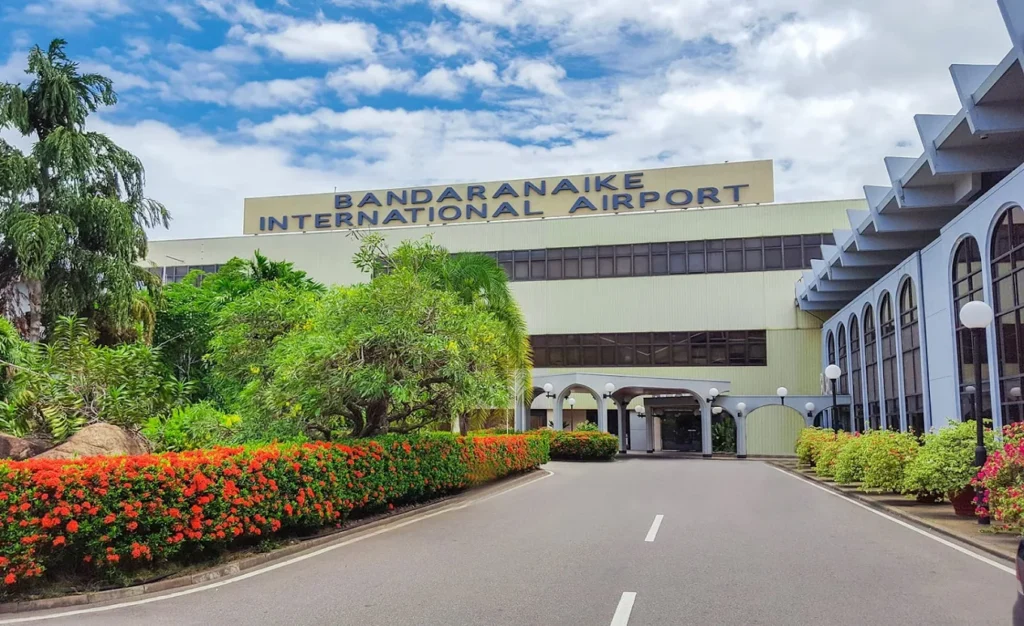
Located near Colombo, Bandaranaike International Airport is currently the country’s primary international gateway, handling the majority of passenger and cargo traffic. The airport serves millions of travelers annually and hosts dozens of international airlines operating regional and long-haul routes.
Future improvements at the airport could further enhance its role as an operational aviation hub. Possible developments include:
• Faster turnaround facilities for long-haul aircraft
• Expanded cargo and logistics capabilities
• Efficient refueling and crew rotation services
• Increased runway and terminal capacity
These upgrades would allow the airport to accommodate more transit operations without attempting to compete directly with mega-hubs in the Gulf.
Mattala Airport: From Underutilized Asset to Strategic Aviation Base
While Sri Lanka’s main airport is located in the western region of the island, the Mattala Rajapaksa International Airport offers significant additional capacity.
Despite being one of the most modern airports in South Asia, Mattala currently operates far below its designed capacity. However, aviation analysts believe it could serve a number of specialized roles within the global aviation network.

Potential uses include:
- Technical stops for long-haul flights
- Aircraft maintenance and repair facilities
- Cargo handling and logistics operations
- Aircraft parking and staging areas
- Emergency diversion airport during regional disruptions
By offering competitive landing fees, efficient logistics services, and strong infrastructure, Mattala could attract airlines looking for reliable operational bases in the Indian Ocean.
Strengthening Connectivity Across South Asia
Sri Lanka’s aviation opportunity is also linked to the rapid growth of nearby aviation markets.
The island sits within close proximity to several densely populated regions including:
- India
- Bangladesh
- Maldives
Passenger demand and air cargo volumes across these markets are expanding rapidly, creating opportunities for regional transit hubs.
By providing a stable, neutral aviation platform, Sri Lanka could help connect these markets more efficiently while strengthening regional logistics networks.
Potential Boost for Sri Lanka’s Aviation Sector
The strategic development of Sri Lanka’s aviation infrastructure could also increase the commercial value of the country’s national carrier, SriLankan Airlines, which operates international flights across Asia, Europe, and the Middle East.
Positioning Sri Lanka as a secondary aviation hub could:
• Attract foreign investment into airport infrastructure
• Improve the financial outlook of the national airline
• Expand air cargo and logistics industries
• Create new employment opportunities in aviation services
Such developments could transform currently underperforming aviation assets into valuable components of the global transport network.
A New Role in the Global Aviation Map
While Sri Lanka is unlikely to replace major global aviation hubs such as Dubai or Doha, analysts believe the country can play an important complementary role.
Instead of competing with mega-hubs, Sri Lanka could become a reliable secondary aviation node supporting international airline networks during periods of geopolitical disruption.
This role would allow the island to leverage its strategic location while gradually strengthening its aviation industry.
Conclusion
As global aviation adapts to an increasingly complex geopolitical environment, the demand for resilient infrastructure and alternative routes is growing rapidly.
Sri Lanka’s geographic position, existing airport infrastructure, and proximity to major South Asian markets give the country a unique opportunity to emerge as a key aviation support hub in the Indian Ocean.
With the right policy decisions and infrastructure development, Sri Lanka could secure a strategic role along the “New Silk Route” of global aviation, strengthening its economy while supporting international air connectivity.
