

Sri Lanka is continuing to modernize its immigration and residence visa system as the country positions itself as a growing hub for tourism, investment, remote work, education, and international business. The latest updates from the Department of Immigration and Emigration have brought renewed attention to residence visa categories, visa extensions, digital processing systems, and foreign residency opportunities in the country.
For foreign investors, digital nomads, expatriates, students, and even Sri Lankans living overseas, these immigration developments could play a major role in long-term planning and travel decisions.
According to the official Sri Lanka Department of Immigration and Emigration, Sri Lanka continues to expand and streamline several visa categories while strengthening border management and residency procedures.
Sri Lanka’s Growing Appeal for Foreign Residents
Over the past few years, Sri Lanka has become increasingly attractive for:
- Foreign investors
- Remote workers and digital nomads
- International students
- Retirees
- Business professionals
- Foreign spouses of Sri Lankan citizens
- BOI project employees
- Tourism sector professionals
The country’s lower living costs, tropical lifestyle, developing infrastructure, and strategic location in South Asia continue to attract international attention.
The government’s immigration framework now supports multiple categories of residence visas designed for different professional and personal purposes.
What Is a Sri Lankan Residence Visa?
A Sri Lankan residence visa allows a foreign national to legally stay in the country for an extended period under approved categories.
The Department of Immigration states that residence visas are issued to non-Sri Lankans whose stay in the country is considered beneficial and not harmful to the national interest.
These visas are generally valid for one year and may be renewed annually depending on the category and approval conditions.
Main Residence Visa Categories in Sri Lanka
Sri Lanka currently offers several residence visa categories.
1. Employment & BOI Project Visas
These visas are granted to:
- Foreign professionals working on government-approved projects
- BOI company employees
- Foreign bank personnel
- Skilled expatriates
Applicants usually require:
- Employer sponsorship
- Ministry recommendations
- Passport documentation
- Health protection clearance
Sri Lanka continues encouraging foreign investment projects, making these categories especially important for international businesses operating locally.
2. Investor & Business Residence Visas
Foreign investors involved in Sri Lankan businesses or approved investment programs may qualify for residence facilities.
With major development projects including:
- Colombo Port City
- Tourism developments
- Infrastructure investments
- Technology ventures
Sri Lanka is expected to attract increased foreign residency interest over the coming years.
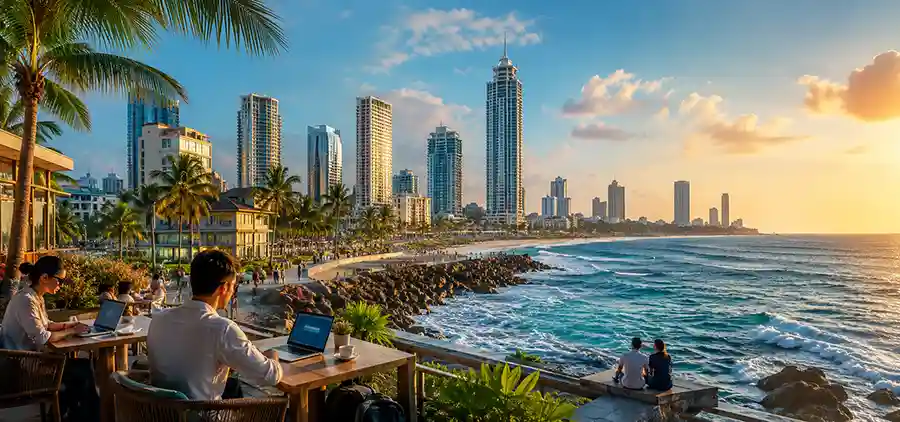
3. Digital Nomad Visa Interest Growing
Sri Lanka has also shown increasing interest in attracting remote workers and global freelancers.
The Department of Immigration now references Digital Nomad-related visa pathways among its listed residence categories.
Industry experts believe this could significantly boost:
- Tourism revenue
- Long-stay foreign spending
- Property rentals
- Co-working business growth
- Hospitality and service sectors
With global remote work trends expanding, Sri Lanka could become one of South Asia’s emerging destinations for digital professionals.
4. Student Residence Visas
Foreign students studying in Sri Lankan universities, educational institutes, and training centers may apply for residence visas.
Required documents generally include:
- Educational institution approval
- Financial proof
- Passport details
- Health protection documentation
Sri Lanka’s growing higher education and private education sectors are increasingly attracting regional students.
5. Residence Visas for Foreign Spouses
Foreign nationals married to Sri Lankan citizens can also apply for residence visas.
The application process typically requires:
- Marriage certificates
- Sri Lankan spouse documentation
- Passport copies
- Interviews at the Immigration Department
This category remains one of the most commonly used residence visa routes in Sri Lanka.
Tourist Visa Extensions Continue Through Online Systems
Sri Lanka also continues to support online visa extension systems for short-term visitors.
Visitors wishing to remain beyond the standard tourist visa duration may apply for extensions through the government’s e-services platform.
According to official guidance and traveler experiences:
- Tourist stays may be extended progressively
- Online systems support certain extension stages
- Additional approvals may require in-person visits to Battaramulla Immigration Headquarters
Special Free Visa Extension Measures Introduced
The Department of Immigration recently announced temporary free visa extensions for certain foreign nationals affected by Middle East flight disruptions.
Foreign travelers unable to leave Sri Lanka due to flight cancellations were granted special short-term extensions subject to verification.
This move was widely viewed as a positive humanitarian and tourism-support measure during regional travel disruptions.
Sri Lanka Strengthening Digital Immigration Services
The immigration department is also gradually improving:
- Online visa systems
- ETA processing
- Status inquiries
- Digital applications
- Overseas mission coordination
The government has emphasized modernization and improved regional immigration standards as part of broader digital transformation goals.
Why This Matters for Sri Lanka’s Economy
Sri Lanka’s immigration policies are closely connected to:
- Foreign direct investment (FDI)
- Tourism growth
- International business expansion
- Property and real estate demand
- Startup ecosystems
- Education exports
Easier and clearer residence pathways could encourage:
- More foreign entrepreneurs
- Long-term tourism spending
- Skilled expatriate relocation
- International partnerships
Many analysts believe immigration reforms may become increasingly important as Sri Lanka seeks stronger economic recovery and global competitiveness.
Challenges Still Remain
Despite progress, travelers and foreign residents sometimes report:
- Delays in online processing
- Portal technical issues
- Documentation confusion
- Long waiting periods
Several online travel discussions show that some applicants still prefer in-person immigration visits for smoother processing.
Improving digital reliability and customer service could further strengthen Sri Lanka’s international image.
Sri Lanka Positioning Itself as a Regional Opportunity Hub
As South Asia becomes more globally connected, Sri Lanka appears increasingly focused on attracting:
- International talent
- Global investors
- Long-term tourists
- Tech professionals
- Overseas entrepreneurs
With strategic reforms and improved immigration systems, the island nation could emerge as a stronger destination for global mobility in the years ahead.
For the latest official updates, applicants are encouraged to refer directly to the Department of Immigration and Emigration Sri Lanka.
