
Proposed 30-Day Visa Exemption Could Strengthen Tourism, Trade and Cultural Connections Between the Two Countries
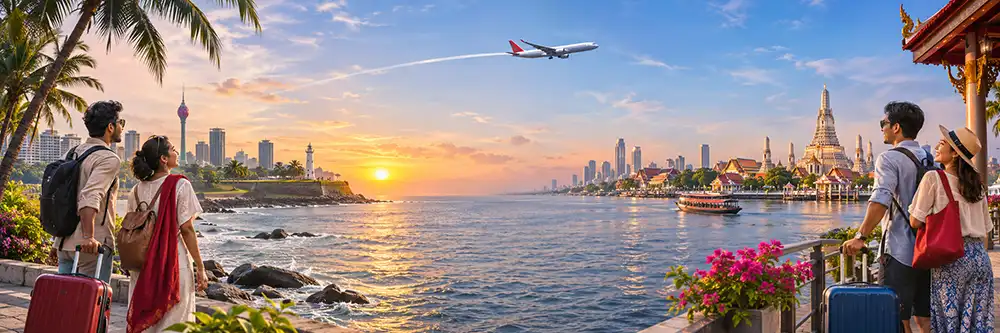
Sri Lanka and Thailand are preparing to sign a reciprocal visa-exemption agreement designed to make short-term travel easier for citizens holding ordinary passports.
The planned agreement is a key part of the official visit to Sri Lanka by Thailand’s Deputy Prime Minister and Minister of Foreign Affairs, Sihasak Phuangketkeow. Sri Lanka’s Ministry of Foreign Affairs announced that the agreement would be signed during the visit. However, as of 22 November 2026, an official statement confirming that the signing has taken place has not been located. Sri Lanka
The development could support greater movement between the two countries for tourism and cultural exchanges. It may also create opportunities for airlines, tour operators, accommodation providers, restaurants and other businesses serving international travellers.
What the Proposed Agreement Covers
Under the framework approved by the Sri Lankan Cabinet, citizens holding valid ordinary passports would be permitted to enter, leave or transit through the other country without obtaining a visa in advance when travelling for general tourism purposes.
The proposed conditions include:
- A maximum stay of 30 days during a single visit
- Total stays of no more than 90 days within any 180-day period
- Reciprocal access for eligible Sri Lankan and Thai ordinary-passport holders
- Travel permitted for general tourism purposes
- Employment, education, media work and other activities requiring prior approval excluded from the exemption
Travellers intending to work, study, undertake media assignments or remain beyond the permitted period would still need to obtain the appropriate visa or official authorisation. cabinetoffice.gov.lk
Maximum single visit
Maximum within 180 days
Principal permitted purpose
Official Visit Places Travel Agreement in Focus
Phuangketkeow arrived in Sri Lanka during an official visit involving meetings with senior Sri Lankan leaders and bilateral discussions with Minister of Foreign Affairs, Foreign Employment and Tourism Vijitha Herath.
The programme also included his participation in the Royal Kathina Ceremony at Asgiriya Maha Viharaya in Kandy as the royal representative of Thailand’s King Maha Vajiralongkorn.
Official statements indicate that discussions are expected to cover tourism and hospitality, agriculture, fisheries, food processing, trade, investment and development cooperation. Sri Lanka
Opportunities for Tourism Businesses
A functioning visa exemption could make spontaneous and short-duration leisure travel more convenient. This could benefit businesses offering:
- Air travel and regional connections
- Hotels, guesthouses and homestays
- Tour operations and destination experiences
- Restaurants and cultural attractions
- Wellness, pilgrimage and heritage tours
- Local transport and travel services
Sri Lanka and Thailand share longstanding Buddhist and cultural connections. Easier travel could therefore support religious and heritage tourism alongside conventional holidays.
However, increased visitor numbers or business revenue should not be presented as guaranteed outcomes. The commercial impact will depend on factors including flight availability, travel costs, destination marketing and traveller demand.
Potential Value for Sri Lankan Travellers
Once the agreement becomes operational, eligible Sri Lankan ordinary-passport holders could travel to Thailand for qualifying short tourism visits without completing the usual advance-visa process.
The reciprocal arrangement could similarly make Sri Lanka more accessible to eligible Thai visitors, supporting tourism connections in both directions.
Travellers will still need to comply with passport-validity rules, immigration requirements, permitted activities and the authorised duration of stay. Visa-free entry does not provide permission to work, study or conduct regulated activities.
When Will Visa-Free Travel Begin?
Signing the agreement would not necessarily mean that visa-free travel begins immediately.
Information released following Thailand’s Cabinet approval indicates that the agreement is expected to enter into force on the 60th day after the final diplomatic notification confirming that both countries have completed their necessary domestic procedures. nationthailand.com
Therefore, travellers should wait for the governments or immigration authorities of Sri Lanka and Thailand to announce:
- Confirmation that the agreement has been signed
- The official commencement date
- Passport-validity requirements
- Entry and transit procedures
- Any required arrival forms or supporting documents
- Rules governing extensions and repeat visits
Bookings should not be made solely on the assumption that the proposed exemption is already operating.
A Timely Development for Sri Lanka’s Tourism Sector
The planned agreement comes as Sri Lanka works to strengthen international tourism and expand regional connectivity. The country passed two million tourist arrivals for 2026 on 20 November, reaching that milestone for the third consecutive year.
A reciprocal travel arrangement with Thailand could complement that momentum by supporting closer tourism, cultural and commercial engagement with Southeast Asia.
Its practical value, however, will become clearer only after the signing and implementation details are officially announced.
Quick Facts
| Detail | Verified position |
|---|---|
| Countries | Sri Lanka and Thailand |
| Eligible documents | Valid ordinary passports |
| Main permitted purpose | General tourism |
| Maximum single visit | 30 days |
| Aggregate limit | Up to 90 days within 180 days |
| Work and study | Not covered by the exemption |
| Signing status | Scheduled; confirmation should be checked |
| Operational date | Not yet officially announced |
SLD Editorial Note
This article reflects official information available on 22 November 2026. Readers should check announcements from the relevant foreign affairs, immigration and embassy authorities before travelling.

Comments