
Global recognition places Sri Lanka’s spices, seafood, regional cuisines and centuries-old food traditions in the international spotlight
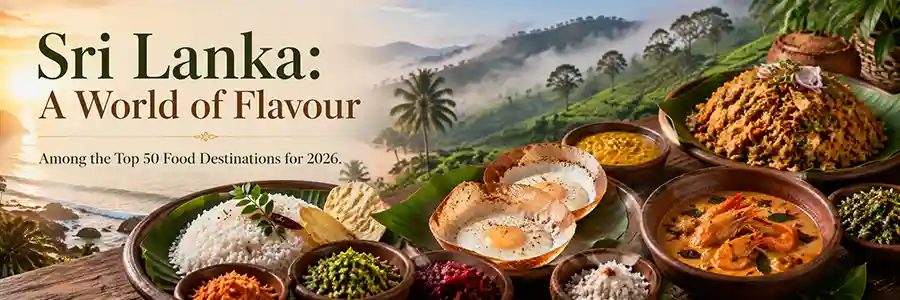
Highlighted Article Description: Sri Lanka has secured 50th place in Travel And Tour World’s Top 50 Food Destinations for 2026, bringing valuable global attention to the island’s culinary heritage, distinctive regional dishes and growing potential as a food-tourism destination.
Sri Lanka has earned fresh international recognition after being included in Travel And Tour World’s Top 50 Food Destinations Around the World for 2026.
The island was ranked 50th in the editorial list, which was prepared by Travel And Tour World—TTW to recognise destinations associated with culinary heritage, regional diversity, street-food culture, fine dining, locally sourced ingredients, sustainability and authentic food experiences. Mexico placed first, followed by Italy, Spain, Japan and India.
Although Sri Lanka completed the Top 50 list, its inclusion alongside some of the world’s best-known culinary nations gives the country another opportunity to promote its food, culture, restaurants and tourism experiences internationally.
The recognition also reinforces an important message: Sri Lankan cuisine cannot be represented by one curry or a single style of cooking. It is a diverse food culture shaped by geography, agriculture, migration, trade, religion and recipes passed through families and communities.
Sri Lanka Joins the World’s Food Top 50
The 2026 TTW editorial ranking highlights the island’s regional flavours, street food, seafood and distinctive culinary heritage.
A Culinary Identity Built on Spice and Diversity
Sri Lankan cuisine is widely recognised for combining aromatic spices, fresh produce, coconut, seafood and regional cooking traditions.
Coconut milk, grated coconut, curry leaves, pandan leaves, chilli, cinnamon, pepper, cardamom, cloves, tamarind and mustard seeds are commonly used to create layered flavours. Sri Lankan dishes may be hot, mild, sour, sweet or richly spiced depending on the region, occasion and family recipe.
A traditional meal often includes rice accompanied by several curries, dhal, vegetables, sambols, pickles, fried items and papadum. The flavour of the full meal comes from the balance between the individual dishes rather than from one dominant component.
Sri Lanka Tourism describes the country’s cuisine as a product of its many varieties of rice, spices, vegetables, fruit and foreign influences. Its official food guide highlights colourful curries, hoppers, string hoppers, pittu, lamprais, seafood, short eats and desserts such as curd with palm honey and wattalapam.
The island’s long food history also reflects ancient rice cultivation, local grains, traditional preservation methods and the influence of Portuguese, Dutch and British rule.
More Than Rice and Curry
Rice and curry may be the expression most commonly associated with Sri Lankan food, but the island’s culinary tradition is considerably broader.
Hoppers are bowl-shaped pancakes made from a fermented rice-flour and coconut-milk batter. Egg hoppers add an egg to the centre and are frequently served with sambol or curry.
String hoppers are delicate steamed rice-flour noodles, commonly eaten with dhal, coconut gravy and spicy accompaniments.
Kottu roti is prepared by chopping flatbread together with vegetables, egg and optional meat or seafood on a heated metal surface. The rhythmic sound of the metal blades has become closely associated with Sri Lankan street-food culture.
Pittu, kiribath, lamprais, fish ambul thiyal, Jaffna crab curry, pol sambol, lunu miris, wattalapam and numerous regional sweets add further depth to the country’s food identity.
The same dish may taste different from one household to another because families use their own spice blends, cooking methods and proportions. This variation is not inconsistency—it is part of what makes Sri Lankan food personal and culturally meaningful.
Ten Sri Lankan Culinary Destinations Highlighted by TTW
TTW identified ten destinations that represent Sri Lanka’s culinary diversity: Colombo, Galle, Kandy, Negombo, Ella, Jaffna, Mirissa, Nuwara Eliya, Hikkaduwa and Trincomalee.
Colombo
Colombo offers one of the country’s widest selections of traditional and modern dining experiences.
The capital is associated with rice and curry, kottu roti, hoppers, short eats and seafood. Visitors can explore local eateries, markets, bakeries, cafés, hotel restaurants and modern venues presenting Sri Lankan ingredients in new ways.
TTW specifically highlighted Colombo for rice and curry, kottu, hoppers and fresh seafood.
Galle
Galle combines southern Sri Lankan flavours with a historic coastal setting.
Seafood, Sri Lankan curries and dining influenced by the city’s colonial history form part of the destination’s attraction. Restaurants in and around Galle Fort allow visitors to experience local cuisine among heritage architecture and ocean views. TTW described Galle as a destination for seafood, Sri Lankan curries and colonial-era dining.
Kandy
Kandy represents the traditional cuisine of Sri Lanka’s central region.
Rice and curry, regional produce, local sweets and home-style food contribute to the city’s culinary identity. Food also complements Kandy’s wider reputation for history, religion, arts and traditional culture.
TTW highlighted Kandy for authentic local cuisine, rice and curry, and traditional sweets.
Negombo
Negombo’s food culture is closely connected to its lagoon, fishing industry and coastal communities.
Seafood curries, grilled fish, prawns and lagoon specialities are widely available in restaurants, markets and hotels. Its proximity to Bandaranaike International Airport also makes it an accessible first or final food stop for international travellers.
TTW recognised Negombo for seafood curries, grilled fish and lagoon specialities.
Ella
Ella combines Sri Lankan food with hill-country produce, cafés and scenic dining.
The destination’s cooler environment, mountain scenery and proximity to tea-growing areas create a dining experience that differs from the coast. TTW highlighted Ella for organic produce, Sri Lankan cuisine and hill-country dining.
Jaffna
Jaffna offers one of Sri Lanka’s most distinctive regional cuisines.
Northern food is known for seafood, roasted spice blends, Tamil culinary traditions and palmyrah-based ingredients. Crab curry, dosas and strongly flavoured dishes give Jaffna a food identity that differs significantly from many other parts of the island.
TTW highlighted Jaffna for crab curry, dosas and bold Tamil-inspired flavours.
Mirissa
Mirissa is associated with fresh seafood and relaxed beachfront dining.
Visitors can enjoy fish, prawns, crab and seafood curries close to the southern coastline. The connection between local fishing, beach tourism and casual dining strengthens Mirissa’s appeal as a food destination.
TTW described Mirissa as a location for fresh seafood and beachfront dining.
Nuwara Eliya
Nuwara Eliya offers tea-country cuisine, pastries, highland produce and meals influenced by its colonial and plantation history.
The cooler climate supports a different selection of vegetables and dining experiences from those available in warmer regions. TTW recognised Nuwara Eliya for tea-inspired cuisine, pastries and colonial classics.
Hikkaduwa
Hikkaduwa combines Sri Lankan curries, seafood and energetic beachside dining.
The destination serves both domestic and international visitors through restaurants, cafés and informal coastal venues. TTW highlighted Hikkaduwa for fresh seafood, Sri Lankan curries and its vibrant beachside atmosphere.
Trincomalee
Trincomalee’s food identity is shaped by the sea and the cultural diversity of Sri Lanka’s Eastern Province.
Seafood, coastal curries and regional dishes provide travellers with an introduction to eastern Sri Lankan cuisine. TTW highlighted Trincomalee for fresh seafood and authentic coastal food.
10 Sri Lankan Culinary Destinations
Food as Culture, Memory and Hospitality
Food in Sri Lanka is closely connected to family, religion, celebration and hospitality.
Guests may be welcomed with tea, sweets, snacks or a full meal. Weddings, religious observances, New Year celebrations and family gatherings are often remembered through the dishes prepared and shared.
Kiribath is associated with important occasions and new beginnings. Traditional sweets play a central role during Sinhala and Tamil New Year, while regional festival foods reflect the customs of different communities.
Recipes also preserve family memory. Instructions may be passed from parents and grandparents without ever being formally written down. A curry may carry the history of a household through its ingredients, preparation and flavour.
For visitors, this cultural connection can make food one of the most meaningful ways to understand Sri Lanka.
A market visit, home-cooking class, village meal, seafood experience, tea-estate visit or spice-garden tour can reveal how cuisine connects people with agriculture, landscapes and livelihoods.
Why the Recognition Matters for Tourism
TTW’s ranking is an editorial selection rather than an official government award or independently audited global index. Its value lies in the international visibility it can create for Sri Lanka’s cuisine and tourism industry.
Food can influence where travellers go, how long they stay and which communities benefit from their spending.
A visitor interested in Jaffna crab curry may travel north. Someone looking for seafood may explore Negombo, Mirissa, Galle, Hikkaduwa or Trincomalee. Tea, pastries and hill-country produce may attract visitors to Nuwara Eliya, while Colombo offers an accessible introduction to a broad range of local dishes.
Sri Lanka Tourism already presents dining, tourist-friendly eating places, spice gardens, accommodation, tour guides and regional attractions as important parts of the visitor experience.
This recognition can therefore help Sri Lanka position itself not only as a destination for beaches, wildlife and heritage, but also as a country worth visiting specifically for food.
Opportunities for Local Businesses and Communities
Greater interest in Sri Lankan cuisine could benefit restaurants, cafés, hotels, home-based food businesses, farmers, fishing communities, spice producers, tea estates and tour operators.
Local businesses can develop cooking classes, market tours, regional tasting menus, tea experiences and food-focused travel itineraries.
Food tourism can also distribute visitor spending beyond major hotels and traditional attractions. When travellers visit local eateries, markets, farms and coastal communities, tourism income has a greater chance of reaching small businesses and regional households.
However, recognition alone will not guarantee lasting results.
Businesses must deliver reliable quality, food safety, cleanliness, professional service and accurate customer information. Menus should clearly explain dishes, ingredients and spice levels while identifying vegetarian, vegan and allergy-sensitive choices where possible.
Authenticity should remain central. Sri Lankan food does not need to lose its traditional identity to appeal to international visitors. The stronger approach is to preserve original flavours while improving presentation, storytelling and accessibility.
Who Can Benefit from Culinary Tourism?
International interest in Sri Lankan cuisine can support tourism, hospitality, agriculture, fisheries and regional enterprise.
Restaurants and Cafés
Greater visibility for family eateries, regional menus and independent food businesses.
Food Experiences
New possibilities for cooking classes, tasting menus, market visits and food tours.
Local Producers
Opportunities for farmers, fishing communities, tea estates and spice producers.
Regional Tourism
More reasons for visitors to explore destinations beyond Sri Lanka’s major cities.
Taking Sri Lankan Flavours to the World
Sri Lankan cuisine is already gaining wider recognition through overseas restaurants, chefs, food festivals, community events and digital platforms.
Hoppers, kottu, curries, sambols and traditional sweets are being introduced to audiences far beyond the island. Sri Lankan communities overseas also play an important role in preserving recipes and presenting the country’s food culture to new generations.
This global visibility can encourage international diners to visit Sri Lanka and experience the cuisine in its original environment.
Sri Lanka’s food marketing should therefore move beyond one general image of rice and curry. The country can promote northern crab and roasted spices, eastern coastal cuisine, southern seafood, central highland produce, Colombo street food and traditional village cooking as separate but connected experiences.
SLD Perspective: More Than a Ranking
Sri Lanka’s inclusion in TTW’s Top 50 Food Destinations for 2026 is a welcome recognition of the island’s culinary heritage.
The country’s position at number 50 should be presented accurately, but the opportunity created by the ranking extends beyond the number itself.
It places attention on the cooks, restaurants, farmers, fishers, producers and hospitality businesses that preserve and share Sri Lankan cuisine.
Every hopper prepared at a roadside stall, every family curry recipe, every Jaffna seafood dish and every meal served beside the southern coast contributes to the story of Sri Lanka.
The next step is to convert international attention into sustainable value.
By protecting authenticity, supporting local enterprises, strengthening service standards and making regional food experiences easier to discover, Sri Lanka can build a stronger identity within global culinary tourism.
For travellers searching for bold flavours, cultural depth and genuine hospitality, Sri Lanka offers far more than a meal.
It offers an unforgettable journey through the identity of an island.
