
World Construction Symposium 2026 Puts Sustainable and Regenerative Development in the Spotlight
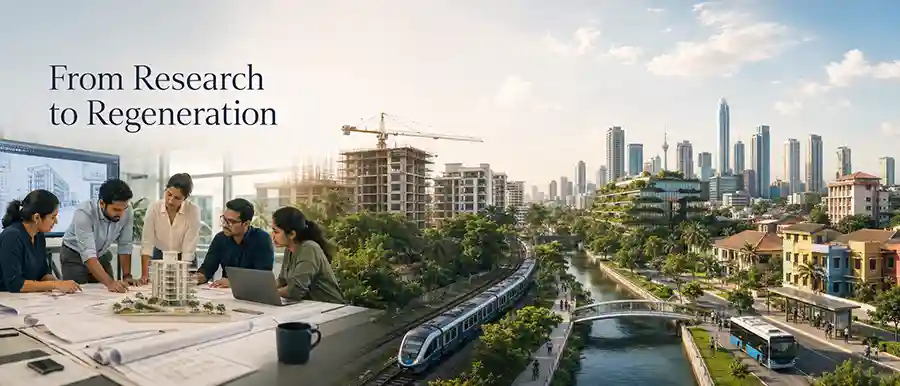
As Sri Lanka looks towards smarter, safer and more sustainable development, the World Construction Symposium is bringing research, professional expertise and industry leadership into one important conversation—how the country’s built environment can move from short-term construction towards lasting national value.
Sri Lanka’s construction sector has taken centre stage in Colombo with the 14th World Construction Symposium and the Sri Lankan Sustainability Awards 2026 bringing together researchers, industry professionals, academics, policymakers and emerging talent.
Held on 10 and 11 July 2026, the two-day symposium was jointly organised by the Ceylon Institute of Builders and the Building Economics and Management Research Unit of the University of Moratuwa’s Department of Building Economics. The official symposium platform described the gathering as an international forum for sharing research, professional experience and new thinking related to construction and the built environment.
The event arrived at an important time for Sri Lanka.
Construction is not simply about erecting buildings. It influences housing, transport, tourism, healthcare, education, employment, energy use, climate resilience and the quality of everyday life.
How Sri Lanka plans and delivers new infrastructure today will affect communities for decades.
The 2026 symposium therefore carried a broader purpose: connecting academic research with practical industry decisions and encouraging construction leaders to think beyond project completion towards long-term social, economic and environmental outcomes.
More Than 100 Research Submissions Reflect Global Interest
The symposium attracted more than 100 research-paper submissions from around the world, demonstrating the growing international relevance of Sri Lanka’s built-environment research community.
Accepted and presented papers are published in symposium proceedings with an ISSN, while full World Construction Symposium papers have been indexed in Scopus since 2019. The official programme also includes best-paper and highly commended-paper awards supported by the Ceylon Institute of Builders and the Built Environment Project and Asset Management journal.
This academic foundation is important because the industry’s biggest challenges cannot be solved through construction activity alone.
Sri Lanka needs reliable research on:
- sustainable materials
- project costs and productivity
- infrastructure resilience
- digital construction
- worker safety
- energy efficiency
- waste reduction
- climate adaptation
- contract management
- affordable housing
- urban planning
- asset maintenance
Research can identify problems, test solutions and help the public and private sectors make better decisions.
However, its real value appears when research findings move beyond conference papers and become part of policy, procurement, design, construction and long-term asset management.
The symposium connected academic research, professional practice and sustainability leadership in one international platform.
From Sustainable Construction to a Regenerative Built Environment
The theme associated with the 2026 symposium was “Towards a Regenerative Built Environment: From Foresight to Action.”
This represents a significant evolution in how construction is discussed.
Traditional sustainability often focuses on reducing harm:
- using less energy
- producing less waste
- lowering emissions
- conserving water
- selecting better materials
A regenerative approach goes further.
It asks whether buildings and infrastructure can actively improve the environment and the lives of the people who use them.
A regenerative project may aim to restore natural systems, strengthen communities, improve public health, support biodiversity or create lasting economic and social value.
For Sri Lanka, this way of thinking is highly relevant.
The country faces climate-related risks, urban pressure, ageing infrastructure, limited public resources and the need to rebuild economic confidence.
Every project must therefore achieve more with the resources available.
A road should improve mobility and economic access. A hospital should support efficient healthcare delivery. A housing project should create a safe and connected community. A tourism development should respect the landscape and benefit local livelihoods.
Construction quality should no longer be measured only by whether a project was completed on time and within budget.
It should also be measured by whether the project remains useful, resilient, efficient and beneficial throughout its life.
Sri Lanka’s Construction Decisions Must Be Guided by Evidence
During the opening of the symposium, attention was drawn to the importance of research and innovation in shaping future infrastructure development and keeping sustainability at the centre of Sri Lanka’s construction agenda.
This message is especially important when public and private resources are limited.
Poorly planned infrastructure can create long-term costs through:
- maintenance failures
- energy inefficiency
- flooding
- congestion
- structural deterioration
- environmental damage
- delays and disputes
- underused facilities
- repeated reconstruction
Evidence-based planning can reduce these risks.
It can help decision-makers understand demand, evaluate alternatives, estimate life-cycle costs and select solutions appropriate to Sri Lanka’s climate, economy and communities.
The country also needs stronger links between universities, construction companies, professional bodies and government institutions.
Academic knowledge should inform industry practice, while real project experience should help researchers focus on the most urgent problems facing the sector.
Sustainable Construction and Regenerative Development
Reduces waste, emissions, energy use and environmental harm.
Seeks to restore ecosystems, strengthen communities and create lasting value.
Sustainability Awards Recognise Leadership Beyond Construction
The Sri Lankan Sustainability Awards 2026 complemented the symposium by recognising individuals, organisations, institutions and projects demonstrating measurable sustainability leadership.
The official awards programme covers more than 50 categories across areas including construction, the built environment, infrastructure, energy, technology, manufacturing, logistics, finance, education, media, community development and leadership.
Entries were assessed using criteria such as:
- innovation
- measurable sustainability impact
- scalability
- governance
- contribution to society
- contribution to the environment
The awards ceremony was scheduled for 11 July 2026 at the Hilton Colombo’s Grand Ballroom.
Recognition programmes can play an important role in changing industry behaviour.
They highlight organisations already achieving strong results and encourage others to adopt better standards.
They also help the public understand that sustainability is not limited to planting trees or installing solar panels.
It can include responsible sourcing, worker wellbeing, safer construction, inclusive design, efficient transport, ethical leadership, waste recovery, community participation and transparent governance.
The strongest sustainability achievements are those that can be measured and repeated—not only promoted through marketing.
Why Industry–University Collaboration Matters
The long-running partnership between the Ceylon Institute of Builders and the University of Moratuwa is one of the symposium’s most valuable features.
The Ceylon Institute of Builders works to develop modern building knowledge, improve industry conditions and promote professional standards among builders.
The University of Moratuwa’s Department of Building Economics has a long history in quantity surveying, project management, construction law and built-environment education. The department states that it was established in 1983 and pioneered state-sector quantity-surveying education in Sri Lanka.
When professional institutions and universities collaborate, the benefits can include:
- stronger research relevance
- improved professional education
- industry access to new ideas
- greater student exposure
- international academic partnerships
- evidence-based public policy
- faster adoption of innovation
Students also benefit from seeing how research applies to live projects and professional decisions.
For young Sri Lankans entering architecture, engineering, quantity surveying, project management, construction law and related fields, events such as the symposium provide exposure to careers that will shape the country’s future.
Digital Technology Is Changing How Projects Are Delivered
Modern construction increasingly relies on data and digital systems.
Building Information Modelling, digital twins, drones, artificial intelligence, automated monitoring and advanced project-management platforms can improve coordination and reduce costly mistakes.
They may help project teams identify clashes before construction begins, monitor progress more accurately and understand how a building performs after completion.
However, technology alone cannot correct poor planning or weak governance.
Digital tools must be supported by:
- accurate data
- trained professionals
- clear project responsibilities
- transparent procurement
- cybersecurity
- long-term maintenance planning
- management commitment
Sri Lanka should not adopt technology merely because it is fashionable.
The focus should be on practical tools that reduce waste, improve safety, increase productivity and deliver better value.
Resilience Must Become a Core Construction Standard
Sri Lanka’s built environment must respond to increasingly complex risks.
Flooding, landslides, extreme heat, coastal exposure and changing rainfall patterns can affect buildings and infrastructure.
Resilience therefore needs to be considered during planning and design—not after a disaster.
This can involve:
- selecting appropriate sites
- improving drainage
- protecting natural water systems
- strengthening structural standards
- planning emergency access
- designing for heat and ventilation
- using durable materials
- maintaining critical infrastructure
- preparing recovery plans
Resilient construction may cost more at the beginning, but repeated damage and reconstruction can cost far more over time.
The industry must also consider economic resilience.
Projects need realistic budgets, dependable supply chains, skilled workers and contracts capable of managing changing costs and unexpected events.
Can the project withstand environmental and economic shocks?
Will it use energy, materials and public resources responsibly?
Will it serve communities safely and equitably?
Can the asset remain useful and affordable throughout its life?
Sustainability Must Also Make Economic Sense
Sustainable construction is sometimes treated as an additional cost.
That view can be too narrow.
A building that uses less energy may reduce operating expenses. Better waste management can lower disposal costs. Stronger design coordination can reduce delays and rework. Durable materials can decrease long-term maintenance.
The right comparison is therefore not only the initial construction cost.
It is the full life-cycle cost of the asset.
A cheaper design may become expensive when energy, repair and replacement costs are considered.
Public-sector projects should receive particular scrutiny because taxpayers may carry those costs for decades.
Sri Lanka needs procurement systems that reward long-term value, not only the lowest initial bid.
This does not mean every project requires the most expensive technology or material.
It means decisions should consider performance, durability, maintainability and community benefit alongside price.
The Construction Sector Can Support National Recovery
A healthy construction industry can generate employment and stimulate activity across many connected sectors.
These include:
- engineering
- architecture
- manufacturing
- transport
- banking
- insurance
- technology
- property
- tourism
- education
- professional services
However, growth must be responsible.
An industry that expands without quality control, financial discipline or environmental safeguards can create future problems.
Sri Lanka’s opportunity is to rebuild confidence by demonstrating that projects can be transparent, professionally managed and aligned with genuine national priorities.
International forums can help by connecting Sri Lankan professionals with global research and new approaches.
But the lasting result will depend on what happens after the speeches, presentations and awards.
The ideas need to reach government agencies, construction sites, design offices, universities and boardrooms.
From Discussion to Action
The 14th World Construction Symposium has reinforced Sri Lanka’s ability to host an internationally relevant built-environment dialogue.
Its importance lies not only in the number of papers presented or professionals attending.
Its greater value is the opportunity to turn knowledge into action.
Sri Lanka’s future construction agenda should prioritise:
- evidence-based infrastructure planning
- climate resilience
- life-cycle value
- transparent procurement
- digital capability
- professional standards
- worker safety
- environmental responsibility
- university–industry collaboration
- measurable sustainability outcomes
The country does not simply need more construction.
It needs better construction—projects that remain valuable, resilient and socially useful long after the opening ceremony.
Sri Lanka’s construction future should not be measured only by how much is built, but by how intelligently, responsibly and sustainably each project serves the country.
The next step is turning research, recognition and professional dialogue into measurable improvements across the industry.
