
Major privately organised visit connects Japanese travellers and investors with Sri Lanka’s heritage, nature and emerging business opportunities
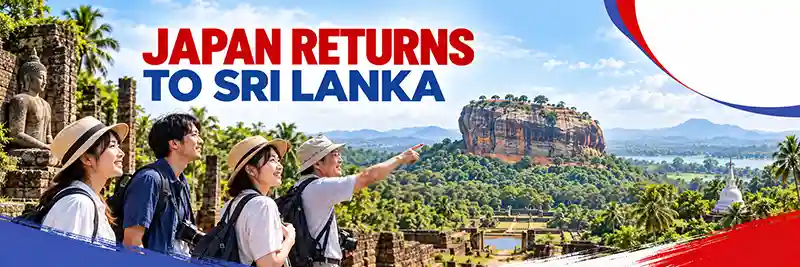
More than 250 Japanese tourists and investors travelled across Sri Lanka in a major privately organised visit connecting Japanese travellers with the island’s heritage, wildlife, tourism and emerging business opportunities.
More than 250 Japanese tourists and investors have completed a major visit to Sri Lanka, bringing renewed attention to the long-standing relationship between Japan and Sri Lanka and highlighting opportunities across tourism, culture, trade and investment.
The visitors arrived at Bandaranaike International Airport from Narita, Japan, aboard SriLankan Airlines flight UL455 on 30 August 2026. The group was welcomed by Sri Lankan aviation officials, including Deputy Minister of Ports and Civil Aviation Janith Ruwan Kodithuwakku.
The visit was organised through the Little Japan initiative associated with Dr. Ruwan Perera and Colombo International Airport Hotel under the campaign theme “Japan Returns to Sri Lanka.”
Organisers described the group as the largest privately organised Japanese visitor delegation to Sri Lanka. As that description originates from the organisers and has been repeated by several local media outlets, Sri Lanka Directory treats it as an organiser-reported distinction rather than an independently established national record.
What is clear, however, is the unusual scale of the visit and its combination of tourism, cultural exchange and potential business engagement.
From Ancient Heritage to Modern Sri Lanka
The delegation’s itinerary showcased several very different sides of Sri Lanka.
Members visited Mihintale and Anuradhapura, including the historic Jaya Sri Maha Bodhi, before travelling onward through Habarana. The journey highlighted Sri Lanka’s Buddhist heritage and its importance as a cultural connection between the two Asian nations.
Later stages of the tour included destinations and experiences reported to include Sigiriya, Minneriya National Park, Koneswaram Temple and Mirigama, combining UNESCO-recognised heritage, wildlife, religious sites and local cultural engagement.
The delegation’s final reported stop was Colombo Port City, giving visitors a contrasting view of Sri Lanka’s modern urban and investment ambitions before their departure for Japan.
This combination is significant for Sri Lanka tourism.
Rather than presenting the country only through one familiar image—such as beaches, wildlife or heritage—the programme exposed visitors to a broader tourism proposition that connects ancient civilisation, spirituality, landscapes, wildlife, hospitality and contemporary development.
The Visit at a Glance
A major people-to-people journey connecting Japanese visitors with Sri Lanka’s heritage, nature and emerging opportunities.
Why Japan Matters to Sri Lanka Tourism
Japan and Sri Lanka have maintained close diplomatic and development ties for decades, but tourism also provides an important people-to-people dimension to that relationship.
Japanese visitors can be particularly relevant to Sri Lanka’s ambitions to develop higher-value and experience-led tourism.
Sri Lanka has a strong offering for travellers interested in Buddhist heritage, archaeology, nature, wildlife, wellness, cuisine and slower cultural travel. Those are areas in which a carefully developed Japanese tourism market could create value beyond simple arrival numbers.
The 250-plus visitor programme also demonstrates the importance of specialised market development.
Successful tourism promotion is not always created through large international advertising campaigns alone. Relationships between travel organisers, hospitality businesses, community partners and repeat visitors can gradually build confidence in a destination.
The Little Japan initiative says its programme expanded from a 45-member business delegation in 2024 to the group of more than 250 visitors involved in the latest visit.
More Than a Conventional Holiday Group
Another notable element of the visit was the reported participation of both tourists and investors.
News First and The Morning described the group as comprising Japanese tourists and investors, while organisers positioned the programme as an opportunity to develop tourism alongside longer-term commercial relationships.
That distinction matters.
A tourism visit does not automatically create investment, and the arrival of potential businesspeople should not be interpreted as confirmation of future projects or capital commitments.
But well-organised visits can provide an introduction to a market.
Visitors experience the country directly, meet local people and businesses, observe infrastructure and hospitality standards, and gain a better understanding of opportunities that may be difficult to communicate through presentations alone.
For Sri Lanka, converting this type of interest into long-term economic value will depend on what happens after the delegation leaves.
Opportunities for Sri Lankan Businesses
A large international group can create immediate demand for accommodation, transport, guides, restaurants, attractions and other tourism services.
The longer-term opportunity is broader.
Sri Lankan hotels, destination-management companies, tour operators, wellness providers, restaurants, cultural organisations and specialist guides can develop products specifically suited to Japanese travellers.
Businesses seeking stronger links with Japan may also benefit from networks created through tourism and cultural exchange.
This is particularly relevant to platforms such as Sri Lanka Directory, whose role is to help connect Sri Lankan businesses, professionals, organisations and destinations with audiences both inside Sri Lanka and around the world.
International visibility becomes more valuable when visitors can easily discover credible local businesses and services before, during and after their journey.
Cultural Tourism Can Become a Stronger Bridge
The delegation’s early visits to Mihintale, Anuradhapura and Jaya Sri Maha Bodhi placed Buddhist heritage prominently within the programme.
This offers Sri Lanka a distinctive advantage.
Sri Lanka and Japan have different Buddhist traditions, but shared Buddhist heritage can provide a meaningful foundation for pilgrimage, educational travel, cultural exchange and repeat visitation.
Developing this market responsibly could involve well-trained multilingual guides, high-quality interpretation of archaeological and religious sites, suitable accommodation, respectful visitor guidance and carefully designed itineraries that allow travellers to understand the historical context rather than simply photograph locations.
When cultural tourism is handled well, visitors leave with more than images. They leave with a deeper connection to the country.
From Sigiriya and Wildlife to Colombo’s New Skyline
The wider itinerary also showed the diversity available within a comparatively compact island.
Sigiriya provides one of Sri Lanka’s most internationally recognisable heritage experiences, while Minneriya represents the country’s wildlife and nature-based tourism offering.
The reported final stop at Colombo Port City added an entirely different perspective—one focused on Sri Lanka’s changing capital, infrastructure and future-facing business ambitions.
For international delegations containing both travellers and commercially interested visitors, that contrast can be valuable.
Sri Lanka can simultaneously present itself as a destination shaped by thousands of years of history and as a country seeking new international partnerships.
Heritage, Nature and a Modern Capital
Anuradhapura
Buddhist heritage
Sigiriya
World heritage
Minneriya
Wildlife experience
Colombo
Modern Sri Lanka
SLD insight: The itinerary presented Sri Lanka as more than a leisure destination—combining culture, nature, hospitality and potential commercial engagement.
The Real Test Comes After the Visit
The arrival of more than 250 visitors is a positive tourism story, but its longer-term importance should be assessed through measurable outcomes.
Future Japanese visitor numbers, repeat group tours, airline connectivity, partnerships between travel businesses, cultural programmes and genuine investment outcomes will provide a better indication of whether the initiative creates lasting momentum.
Sri Lanka should also avoid measuring tourism success only through record-sized groups or total annual arrivals.
A sustainable tourism strategy should consider how long visitors stay, how much value reaches local businesses and communities, whether visitors return, and how effectively natural and cultural assets are protected.
Large delegations can create attention.
Strong tourism ecosystems create long-term value.
The SLD Perspective
The visit of more than 250 Japanese travellers and investors is a positive reminder that Sri Lanka’s strongest international asset is not one single attraction.
It is the combination.
Few destinations can offer ancient Buddhist heritage, UNESCO sites, wildlife, tropical landscapes, hospitality, cuisine and a rapidly changing commercial capital within one relatively compact journey.
For Sri Lanka, the opportunity is therefore much larger than celebrating the arrival of one delegation.
The objective should be to convert international curiosity into lasting relationships.
That means creating professional tourism experiences, supporting trustworthy local businesses, improving multilingual information, maintaining high service standards and giving international visitors genuine reasons to return.
The Japan–Sri Lanka relationship already has a long history.
Tourism and people-to-people connections can help give that relationship a new generation.
Sri Lanka Directory welcomes initiatives that introduce international visitors to Sri Lankan destinations, communities and enterprises while creating responsible opportunities for local businesses.
If this visit encourages more Japanese travellers to discover Sri Lanka—and more Sri Lankan businesses to build credible connections with Japan—its influence may extend far beyond the 250-plus people who made the journey.
Connecting Sri Lanka with the world is not simply about bringing people to the island. It is about building relationships that continue after they return home.
Follow Sri Lanka Directory News for verified stories covering Sri Lankan tourism, business, achievements, communities and global connections.
