
Eleven zones will come under the Industry Ministry and seven under the BOI as Sri Lanka seeks stronger partnerships in manufacturing, technology, logistics and value-added industries
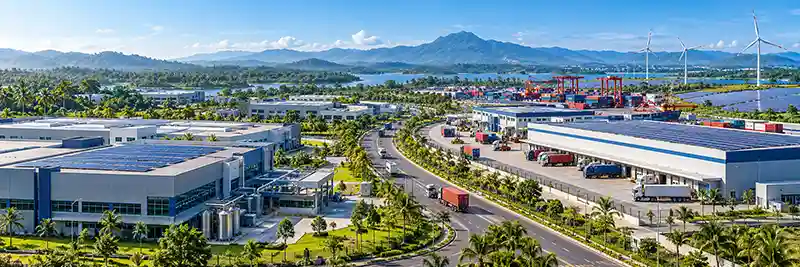
Sri Lanka has announced plans to establish 18 new industrial zones as the country seeks to attract local and international investment, expand manufacturing capacity and develop its position as a regional centre for trade, technology and industry. The proposed zones could create new opportunities for Sri Lankan enterprises, foreign investors and global businesses—but their locations, implementation schedule and investment incentives have not yet been announced.
The proposed zones aim to attract investment and create new opportunities across manufacturing, technology, logistics, renewable energy and exports.
Sri Lanka’s Proposed Industrial Expansion
The proposed zones form part of Sri Lanka’s effort to move from economic stabilisation towards investment-led and export-oriented growth.
Sri Lanka Targets Its Next Phase of Economic Growth
The Sri Lankan Government plans to establish 18 new industrial zones to increase manufacturing capacity and generate new opportunities for local and international businesses.
Deputy Minister of Industry and Entrepreneurship Development Chathuranga Abeysinghe outlined the proposal while participating in the NDTV World Summit 2026 in New Delhi.
He appeared in a discussion titled “Sri Lanka’s Economic Reset: Recovery, Resilience and the Road Ahead.”
Of the 18 proposed zones, 11 are expected to be established through the Ministry of Industry and Entrepreneurship Development. The remaining seven are expected to be developed through the Board of Investment of Sri Lanka. Daily FT
The announcement reflects an effort to move Sri Lanka’s economic agenda beyond immediate stabilisation and towards sustainable industrial development.
However, this is presently a plan rather than confirmation that all 18 zones are operational or under construction.
The Government has not yet publicly confirmed through the reviewed announcements:
- The location of each proposed zone.
- The land allocated to individual projects.
- Construction commencement dates.
- Expected completion dates.
- Total public or private investment.
- Industry allocation for each location.
- Employment projections.
- Tax concessions or zone-specific incentives.
- Application procedures for interested businesses.
These details will be essential for investors and entrepreneurs evaluating future participation.
Opportunities Across Six Priority Sectors
The Deputy Minister identified several sectors with potential for stronger investment and international cooperation:
- Manufacturing.
- Agricultural value addition.
- Logistics.
- Renewable energy.
- Marine industries.
- Technology. Daily FT
This sectoral range indicates that the industrial-zone strategy may extend beyond conventional factory production.
Modern industrial areas can support manufacturing plants, processing facilities, warehouses, research operations, technology businesses, export services and businesses connected to supply chains.
The final role of each proposed zone will depend on its location, infrastructure and approved development plan.
Moving from Production to Value Creation
The success of the proposed industrial zones should not be measured only by the number of factories established.
Sri Lanka’s longer-term opportunity lies in developing industries capable of producing higher-value goods and services, using local knowledge and resources while connecting domestic businesses with international markets.
Agricultural value addition is one example.
Rather than exporting only unprocessed agricultural products, local enterprises could expand into processing, packaging, product development, quality assurance and branded exports.
Technology transfer could also help Sri Lankan manufacturers improve productivity, product consistency, environmental performance and international competitiveness.
The Deputy Minister encouraged foreign companies to build partnerships with established Sri Lankan businesses through investment, technology transfer and improved market access. news.lk
Such partnerships could benefit local companies if they result in genuine improvements to skills, production capabilities, standards and access to overseas customers.
What the Industrial Zones Could Mean for Entrepreneurs
For Sri Lankan entrepreneurs, industrial zones can potentially provide access to infrastructure and business services within a designated area.
Depending on the final plans, these may include:
- Reliable electricity and water.
- Transport and logistics connections.
- Waste-management systems.
- Business-registration assistance.
- Customs and export facilitation.
- Shared testing or quality-control services.
- Digital connectivity.
- Access to suppliers and larger manufacturers.
- Investment facilitation.
- Research and skills partnerships.
These facilities have not yet been confirmed for the proposed zones. They represent the types of services that investors will expect authorities to clarify when detailed development plans are released.
Small and medium-sized enterprises should also be considered in the final model.
If participation is limited to large investors, local businesses may receive only indirect benefits. Supplier-development programs and transparent procurement opportunities could help Sri Lankan SMEs become part of the industrial supply chain.
A Potential Path for Sri Lankan Enterprises
The greatest national benefit will come when local businesses are connected to investment and international markets.
Sri Lanka Seeks Stronger International Partnerships
The investment message was delivered in New Delhi, placing particular attention on opportunities for stronger economic cooperation between Sri Lanka and India.
India’s geographical proximity and large consumer and industrial markets may present opportunities for Sri Lankan businesses seeking investment, technology, components and distribution partnerships.
However, Sri Lanka’s industrial strategy should maintain a broad international outlook and encourage partnerships that deliver measurable long-term value to the country.
High-quality investment should ideally contribute to:
- Sustainable employment.
- Workforce training.
- Export earnings.
- Technology transfer.
- Local supplier development.
- Research and innovation.
- Responsible environmental management.
- Regional economic development.
The number of proposed projects alone will not determine the initiative’s success. The quality, transparency and long-term economic contribution of investment will be equally important.
Simplifying Investment and Digitising Services
The Government is also working to simplify investment procedures, digitise public services and improve regulatory clarity, according to the Deputy Minister. Daily FT
Investors frequently assess more than tax incentives when choosing a country or location.
They also consider:
- The time required to obtain approvals.
- Consistency of regulations.
- Availability of suitable land.
- Energy reliability and cost.
- Import and export procedures.
- Access to skilled workers.
- Contract enforcement.
- Policy stability.
- Transport and digital infrastructure.
A well-designed digital approval system could reduce delays and provide greater transparency. Its value will ultimately depend on whether agencies coordinate effectively and businesses receive clear, predictable decisions.
Environmental and Community Planning Will Be Essential
Industrial expansion also requires responsible land use.
Before new zones are developed, authorities should assess environmental conditions, water requirements, surrounding communities, transport capacity and potential effects on agriculture and wildlife.
Responsible industrial development should include:
- Appropriate environmental assessments.
- Wastewater treatment.
- Safe waste disposal.
- Energy-efficient infrastructure.
- Community consultation.
- Protection of water resources.
- Clear land-acquisition procedures.
- Monitoring of environmental standards.
Ignoring these matters during the planning stage could create greater costs for communities, investors and the Government later.
✓ What Has Been Announced
- Plans for 18 industrial zones
- Eleven zones under the Industry Ministry
- Seven zones through the BOI
- Focus on investment and industrial capacity
- Interest in international business partnerships
⌛ What Is Still Awaited
- Locations of all proposed zones
- Construction and completion schedules
- Total investment requirements
- Expected employment numbers
- Incentives and eligibility criteria
- Business application procedures
From Economic Recovery to Productive Growth
Sri Lanka’s proposed 18-zone industrial expansion represents an important statement of economic direction.
The initiative could strengthen manufacturing, attract capital and create opportunities for Sri Lankan enterprises to join regional and global supply chains.
However, the announcement is only the beginning.
Its impact will depend on the locations selected, the infrastructure delivered, the transparency of approvals and the ability to connect investment with local businesses, workers and communities.
For entrepreneurs and overseas Sri Lankan investors, the next stage will be important. Official details on locations, industries, incentives and participation procedures will determine where the practical opportunities exist.
If implemented with clear policies, reliable infrastructure and responsible planning, the proposed zones could help Sri Lanka turn economic recovery into productive, export-oriented and sustainable growth.
