
Government Warns That Faster Attacks, Quantum Computing and Declining Public Trust Could Challenge Sri Lanka’s Expanding Digital Economy
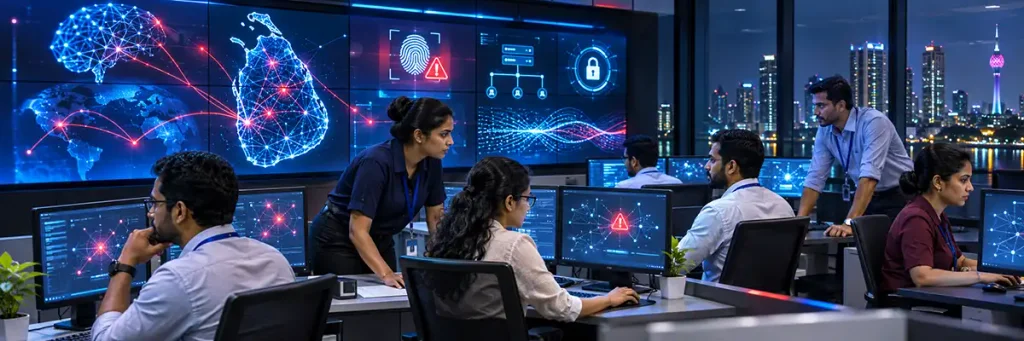
Sri Lanka is facing three growing cybersecurity challenges: rapidly accelerating AI-powered attacks, the future threat of quantum computing to encryption, and declining public trust in digital services. The warning highlights why businesses, government institutions and citizens must strengthen online security as the country expands its digital economy.
Sri Lanka’s businesses, government institutions and online users are being urged to prepare for a new generation of cybersecurity threats driven by artificial intelligence, stolen digital identities and emerging technologies.
Deputy Minister of Digital Economy Eranga Weeraratne has described the country’s cybersecurity challenge through three interconnected countdowns: the attacker’s clock, the quantum clock and the trust clock.
Delivering the keynote address at the 12th Cyber Security Summit in Colombo, the Deputy Minister warned that Sri Lanka’s digital transformation will depend on whether public and private institutions can respond to rapidly evolving threats while maintaining confidence in online services. Daily FT
The summit, organised by the Daily FT and CICRA, brought together nearly 400 participants. Central Bank Governor Dr. Nandalal Weerasinghe attended as Guest of Honour.
What Are the Three Cybersecurity Clocks?
Each “clock” represents a different form of pressure on Sri Lanka’s digital economy.
The Attacker’s Clock: AI Makes Scams Faster
The first threat is the increasing speed at which criminals can create and execute attacks.
Artificial intelligence can help attackers produce convincing fraudulent messages, imitate voices and prepare targeted impersonation attempts. Criminals may no longer need to install sophisticated malicious software when stolen usernames, passwords or AI-generated identities can be used to access systems.
Weeraratne described scams as a growing digital pandemic and cited reports of attackers operating within as little as 16 seconds, with related activity increasing by 89% over a year. These figures were presented during his summit address and should be understood within that context. Daily FT
For Sri Lankan businesses, the threat is particularly relevant to:
- Online banking and payment systems
- Email accounts and cloud services
- Social-media business pages
- Customer and employee databases
- Supplier-payment instructions
- Executive voice and identity impersonation
- E-commerce websites
- Remote-working accounts
A message that appears to come from a director, supplier or bank may be generated or manipulated by an attacker. Businesses should therefore avoid relying solely on a familiar email address, photograph or voice recording when approving sensitive transactions.
The Quantum Clock: Preparing Before Encryption Becomes Vulnerable
The second clock concerns the longer-term development of quantum computing.
Modern organisations rely on encryption to protect banking information, passwords, confidential documents, health records and government data. Powerful quantum computers may eventually be capable of compromising some cryptographic protections currently considered secure.
This does not mean that ordinary encryption has suddenly stopped working. The concern is that organisations may need considerable time to identify affected systems and transition towards quantum-resistant technologies.
The Deputy Minister urged institutions to assess the cryptographic systems they currently use and begin planning for future migration rather than waiting until existing protections become vulnerable. Daily FT
Large financial institutions, telecommunications providers, government departments and businesses retaining sensitive information for long periods may face the greatest planning challenge.
The Trust Clock: Confidence Is Difficult to Rebuild
The third clock may be the most important for ordinary citizens.
Sri Lanka is expanding digital payments, online public services, electronic commerce and technology-based financial platforms. These systems depend on users believing that their money, personal information and identities will be protected.
Repeated scams, data breaches or unreliable services could discourage people from using legitimate digital platforms. Once public trust is damaged, rebuilding it can take much longer than repairing an affected computer system.
This makes cybersecurity more than an information-technology responsibility. It is also a customer-confidence, governance and business-continuity issue.
Cybersecurity Reports in Sri Lanka
The Deputy Minister recently informed Parliament that 2,035 cybersecurity incidents had been reported in Sri Lanka during 2026 up to the time of his statement.
He clarified that the figure included not only direct cyberattacks but also alerts and identified security threats. Sri Lanka CERT had issued 2,119 security alerts concerning 112 government institutions, including incidents involving fake social-media accounts impersonating public bodies. Daily Mirror
Separately, the Deputy Minister told the Cyber Security Summit that Sri Lanka CERT received more than 12,600 complaints during 2025—an average of approximately 35 complaints a day. LankaNewz
These numbers refer to different measurements and reporting periods. They should not be directly compared as though they represent identical categories of cyberattacks.
Government Plans to Strengthen Cyber Defences
The Government is working on several measures intended to improve national cybersecurity preparedness.
Plans outlined at the summit included:
- A proposed Cybersecurity Bill
- A Cybersecurity Regulatory Authority
- A National Cybersecurity Operations Centre
- Continuous monitoring of critical systems
- A proposed Defence Cyber Command
- Greater consolidation of government data onto secured cloud platforms
- Stronger cybersecurity standards across public and private institutions
Sri Lanka CERT currently plays a central role in responding to incidents and issuing security guidance. The proposed regulatory framework is intended to introduce wider standards and compliance responsibilities.
These initiatives remain subject to their respective legislative, administrative and implementation processes. They should not be described as fully operational unless officially confirmed.
What Sri Lankan Businesses Can Do Now
Companies do not need to wait for new legislation before improving their protection.
Recommended immediate measures
- Enable multi-factor authenticationProtect email, banking, accounting, cloud and social-media accounts with an additional verification method.
- Verify payment instructions separatelyConfirm changes to bank details or urgent transfer requests by calling a trusted contact through a previously verified number.
- Train employees to recognise AI-assisted scamsStaff should understand that voices, photographs, documents and video calls can potentially be manipulated.
- Review administrator accessRemove access belonging to former staff and limit powerful permissions to people who genuinely require them.
- Maintain protected backupsImportant business information should be backed up and tested regularly.
- Update software and websitesUnsupported software, outdated plugins and unpatched systems can create avoidable entry points.
- Prepare an incident-response planDecide in advance who will contact the bank, technology provider, insurer, customers and authorities if an incident occurs.
- Discuss cybersecurity at management levelCybersecurity should be reviewed as a financial and operational risk—not only as a technical matter.
These are general risk-reduction measures. Businesses handling sensitive or regulated information may require professional cybersecurity, legal and compliance advice.
Why This Story Matters to SLD Readers
Sri Lankan enterprises increasingly depend on digital communication to reach customers locally and internationally.
A cyber incident can interrupt sales, expose customer information, redirect payments and damage a company’s reputation. Small businesses may be especially vulnerable because they often use the same email, mobile device and social-media accounts for multiple business functions.
Sri Lankan-owned businesses operating overseas also face risks from impersonation scams targeting diaspora communities, international suppliers and cross-border payments.
Protecting digital trust is therefore essential to SLD’s wider purpose of supporting Sri Lankan entrepreneurship and global business connections.
Digital Growth Must Be Matched by Digital Protection
Sri Lanka’s transition towards a connected digital economy offers significant opportunities. However, introducing more online services without appropriate safeguards could expose citizens and businesses to greater risks.
The three-clock warning offers a useful way to understand the challenge:
- Attackers are becoming faster.
- Encryption planning must begin before quantum threats mature.
- Public trust can disappear more quickly than it can be restored.
Sri Lanka’s digital future will depend not only on how quickly new technology is adopted, but also on how safely and responsibly it is implemented.

Comments