
Sri Lanka Renewable Energy & Investment
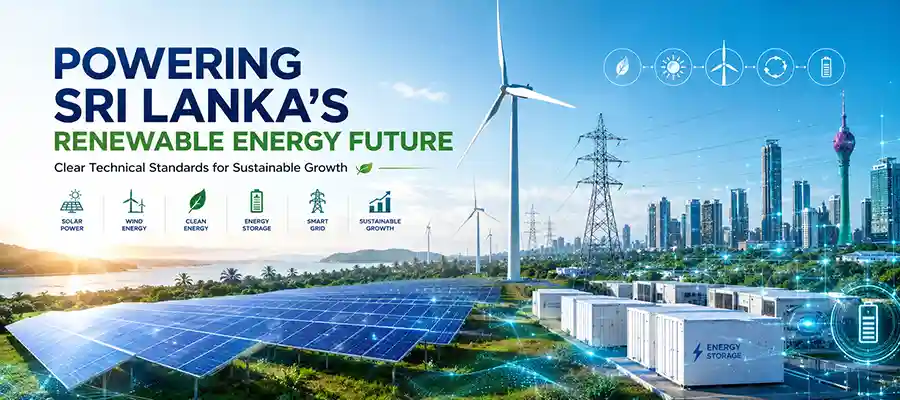
Sri Lanka Urged to Establish Clear Technical Frameworks for Renewable Energy, Battery Storage and Smart Grid Development to Accelerate Clean Energy Investment, Strengthen National Energy Security, Build Investor Confidence and Support Long-Term Sustainable Economic Growth
Sri Lanka’s transition towards renewable energy is gaining momentum, but industry experts believe the country’s success will depend on more than simply building additional solar and wind power projects.
As clean energy investments continue to grow, specialists are calling for stronger technical standards, clearer regulatory frameworks and modern grid planning to ensure renewable energy can be integrated safely, efficiently and reliably into the national electricity system.
The call comes at a time when Sri Lanka is seeking to reduce its dependence on imported fossil fuels, improve energy security and create a more sustainable economy.
Speaking during the Energy Transition in Sri Lanka: Strategic Insights from Global Markets forum organised by the Ceylon Chamber of Commerce, industry leaders highlighted that establishing clear technical frameworks is now one of the country’s highest priorities for accelerating renewable energy development.
Their message was simple — renewable energy growth requires more than investment. It requires a well-planned technical foundation that supports long-term national development.
⚡ Renewable Energy at a Glance
Clear Technical Standards
Industry experts say stronger technical frameworks are essential for Sri Lanka’s renewable energy future.
Solar & Wind Growth
Renewable projects continue to expand as Sri Lanka increases clean electricity generation.
Battery Storage
Modern storage technologies will help balance renewable energy supply and demand.
Investor Confidence
Transparent policies encourage local and international renewable energy investment.
Sri Lanka’s Renewable Energy Journey Is Entering a New Phase
Over the past decade, Sri Lanka has significantly expanded renewable electricity generation through solar, wind and hydro power projects.
Government policies encouraging cleaner energy have also attracted increasing interest from private investors, developers and international financial institutions.
However, as renewable energy capacity continues to grow, experts say the country’s electricity infrastructure must also evolve.
Adding more renewable energy without modern technical standards could create operational challenges for the national grid, making planning and regulation just as important as investment itself.
Why Technical Frameworks Matter
Technical frameworks may sound like highly specialised engineering documents, but they play an essential role in every successful energy system.
They establish how renewable energy projects connect to the national grid, how electricity quality is maintained, how equipment should operate safely and how different technologies communicate with each other.
Without these standards, renewable projects may face delays, inconsistent approvals and uncertainty during development.
A clear technical framework provides confidence not only for engineers but also for investors, lenders, regulators and electricity consumers.
Simply put, good technical standards create a stronger and more reliable energy system.
📊 Why Technical Frameworks Matter
| Area | Current Challenge | Expected Benefit |
|---|---|---|
| Grid Connection | Different project requirements | Consistent approvals and smoother integration |
| Battery Storage | Limited technical guidelines | Safer and more reliable energy storage |
| Investment | Regulatory uncertainty | Greater investor confidence |
| Power System | Increasing renewable energy complexity | Improved electricity reliability |
| Economic Growth | Delayed infrastructure investment | Faster clean energy development |
Clear technical standards help governments, investors, engineers and electricity providers work together more efficiently.
Building Investor Confidence for Future Energy Projects
Renewable energy projects require substantial long-term investment.
Developers often commit millions of dollars before construction even begins.
Before making these investments, companies want certainty.
They need predictable approval processes, transparent regulations and clear technical requirements that remain consistent throughout the life of a project.
Industry leaders believe that strengthening Sri Lanka’s regulatory and technical environment will encourage greater private sector participation while attracting international investment into renewable energy infrastructure.
Greater investor confidence ultimately means more renewable energy projects, improved electricity generation and new employment opportunities.
Battery Storage Will Become Increasingly Important
As Sri Lanka expands solar and wind generation, battery energy storage systems are expected to become a critical part of the country’s future electricity network.
Unlike conventional power stations, renewable energy production changes depending on weather conditions.
Solar panels generate electricity during daylight hours, while wind output varies throughout the day.
Battery storage helps solve this challenge by storing surplus electricity and releasing it when demand increases.
However, experts emphasise that battery systems also require their own technical standards covering installation, safety, maintenance, fire protection and grid integration.
Developing these frameworks now will help ensure battery storage can be introduced safely and efficiently across the country.
Modernising the National Electricity Grid
Sri Lanka’s electricity network was originally designed around large centralised power stations.
Today’s energy landscape looks very different.
Rooftop solar systems, utility-scale solar farms, wind parks, battery storage facilities and electric vehicles are creating a more decentralised electricity network.
Managing these new energy sources requires a smarter and more flexible national grid.
Modern grid technologies can improve system reliability, reduce electricity losses, support two-way electricity flows and respond more effectively to changing demand.
Experts believe grid modernisation should be viewed as a national investment rather than simply an infrastructure upgrade.
Clean Energy Is Also an Economic Opportunity
Renewable energy is no longer viewed solely as an environmental initiative.
Across the world, countries are using clean energy to attract investment, strengthen industries and improve economic competitiveness.
Reliable electricity is essential for manufacturing, tourism, technology companies, logistics, agriculture and digital services.
Sri Lanka’s growing digital economy—including artificial intelligence, cloud computing and data centres—will require increasing amounts of stable and affordable electricity.
Creating a reliable renewable energy system therefore supports not only environmental goals but also future economic growth.
Developing Skills for the Energy Transition
Technology alone will not drive Sri Lanka’s clean energy future.
A successful transition also requires skilled professionals capable of designing, installing, operating and maintaining increasingly sophisticated energy systems.
Engineers, electricians, software specialists, planners, safety experts and technicians will all play important roles.
Industry leaders have highlighted the need for stronger collaboration between universities, vocational training institutions, government agencies and private companies to ensure Sri Lanka develops the workforce required for tomorrow’s energy sector.
Investing in education today can help create thousands of high-value jobs in the years ahead.
Collaboration Will Be the Key to Success
The renewable energy transition cannot be achieved by one organisation alone.
Government agencies, electricity authorities, regulators, private investors, financial institutions, technology providers and academic institutions must work together to build an integrated energy ecosystem.
Industry collaboration also allows countries to adopt international best practices while adapting them to local conditions.
By encouraging open dialogue between stakeholders, Sri Lanka can accelerate project approvals, improve technical standards and reduce unnecessary delays.
This collaborative approach is expected to become increasingly important as renewable energy projects become larger and more technologically advanced.
Looking Towards a Sustainable Energy Future
Sri Lanka possesses significant renewable energy potential through solar, wind and hydro resources.
Combined with growing private sector investment and increasing public awareness, the country is well positioned to expand its clean energy capacity over the coming decades.
However, experts caution that future success depends on building strong technical and regulatory foundations today.
Clear standards, modern grid infrastructure, transparent policies and skilled professionals will all determine how effectively Sri Lanka can achieve its renewable energy ambitions.
If these foundations are established successfully, renewable energy has the potential to improve national energy security, reduce dependence on imported fuels, attract new investment and support long-term economic development.
🚀 Sri Lanka’s Renewable Energy Roadmap
Develop nationally recognised engineering and safety frameworks.
Upgrade infrastructure to support solar, wind and battery storage.
Build transparent regulations that attract long-term investors.
Strengthen education and industry partnerships for future workforce needs.
Use renewable energy to improve energy security and economic resilience.
Final Thoughts
“Renewable energy growth is not only about building more solar and wind farms. It is equally about creating the technical standards, regulatory certainty and modern infrastructure needed to support a secure and sustainable energy future.”
Sri Lanka’s renewable energy journey is entering one of its most important phases.
The discussion led by industry experts highlights that expanding solar panels and wind farms alone will not guarantee success.
A reliable clean energy future also depends on robust technical standards, smarter electricity networks, modern storage technologies and clear policy direction.
By creating a stable and transparent framework for renewable energy development, Sri Lanka can encourage greater investment, strengthen its electricity infrastructure and build a more resilient economy.
As global demand for sustainable energy continues to grow, establishing these foundations today will help ensure Sri Lanka remains competitive while delivering cleaner, safer and more reliable electricity for future generations.
Source: This article is based on publicly reported information from EconomyNext regarding discussions held during the Energy Transition in Sri Lanka: Strategic Insights from Global Markets forum organised by the Ceylon Chamber of Commerce, with additional background and contextual analysis prepared for SLD readers.

Comments