
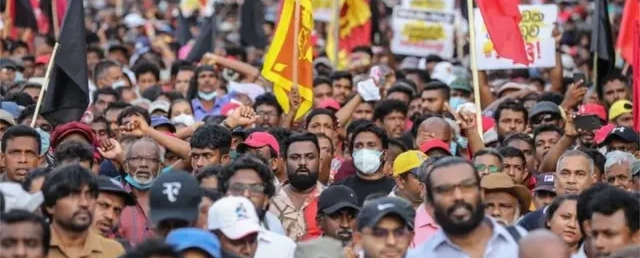
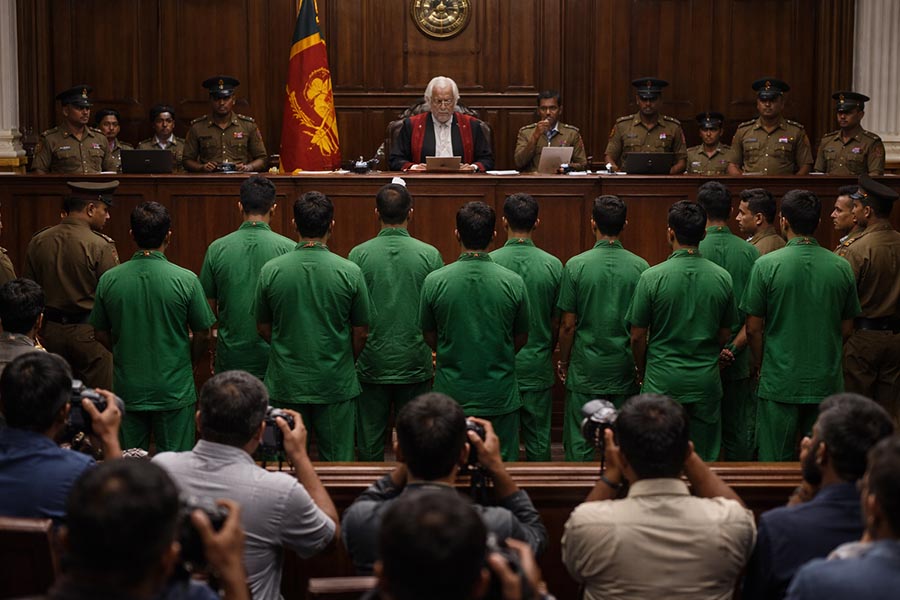
In a landmark ruling that revisits one of the most turbulent chapters in Sri Lanka’s recent political history, a Sri Lankan court on February 11, 2026, sentenced 12 individuals to death for their involvement in the murder of former Parliamentarian Amarakeerthi Athukorale and his police bodyguard during the height of the 2022 economic crisis protests.
The verdict marks a significant judicial development nearly four years after the violent incident that shocked the nation and symbolised the deep political unrest during Sri Lanka’s worst economic collapse since independence.
The 2022 Economic Crisis and Political Turmoil
Sri Lanka’s 2022 economic crisis triggered widespread protests across the country. Severe shortages of fuel, food, electricity, and medicine led to months of public demonstrations demanding political accountability and leadership change.
During the height of the unrest in May 2022, then-MP Amarakeerthi Athukorale was reportedly attacked by a mob in the Nittambuwa area following escalating tensions linked to nationwide protests. His police bodyguard was also killed in the incident. The tragic event intensified fears about public safety and the breakdown of law and order during that period.
The violence occurred amidst broader clashes between protesters and political supporters, marking one of the darkest days of the crisis.
The Court’s Decision
After years of investigation, witness testimonies, and legal proceedings, the court delivered its judgment, sentencing 12 accused individuals to capital punishment.
The ruling sends a strong message regarding accountability for politically motivated violence and mob-related killings. Legal experts describe the decision as one of the most significant court outcomes connected to the 2022 unrest.
While Sri Lanka retains the death penalty under law, it is important to note that the country has not carried out an execution since 1976, effectively maintaining a long-standing moratorium on capital punishment. Therefore, although the sentence has been issued, its implementation remains subject to legal and executive processes.
Legal and Political Significance
The judgment carries considerable legal and political weight for several reasons:
1️⃣ Accountability for Crisis-Era Violence
The ruling demonstrates that violent actions committed during periods of unrest are subject to judicial scrutiny, regardless of the broader political climate.
2️⃣ Public Debate on Capital Punishment
Given Sri Lanka’s decades-long pause on executions, the sentencing has reignited national debate about the relevance and future of the death penalty in the country.
3️⃣ Rule of Law Reinforcement
Analysts argue that such decisions may strengthen public confidence in Sri Lanka’s justice system during the ongoing recovery and stabilisation phase.
Broader Impact on Sri Lanka’s Political Landscape
The 2022 crisis led to major political transformations, including leadership changes and IMF-backed economic reforms. While the country has since moved toward economic stabilisation, the emotional and social scars of the unrest remain.
This ruling highlights how the judicial system continues to process and address incidents tied to that historic period.
Political observers suggest that maintaining legal transparency and due process in such high-profile cases is critical for long-term democratic stability.
Public Reaction and National Reflection
Public reactions have been mixed. Some citizens view the verdict as necessary justice for a tragic loss of life. Others raise concerns about capital punishment and advocate for alternative sentencing approaches.
Human rights organisations are also expected to weigh in, particularly regarding Sri Lanka’s historical stance on the death penalty.
Regardless of differing opinions, the ruling undeniably reopens national reflection on:
- The events of the 2022 crisis
- The balance between justice and reconciliation
- The future of capital punishment in Sri Lanka
Moving Forward: Justice in a Recovering Nation
As Sri Lanka continues its economic recovery and institutional reforms, legal accountability remains a key pillar of rebuilding public trust.
The February 2026 judgment stands as one of the most consequential legal outcomes linked to the 2022 protests — a reminder of the fragility of social order during times of crisis and the enduring role of the judiciary in upholding the rule of law.
Sri Lanka’s journey since 2022 has been one of resilience, reform, and reflection. This latest development adds another significant chapter to that evolving story.
